Gurei Review – A Tense Boss‑Rush with Heart and Kami Powers
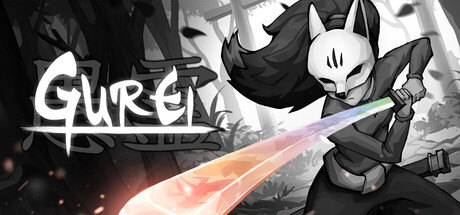
Gurei is a tight 2D boss‑rush where you fight the Kami in any order, absorb their powers and watch the game scale around your choices. Art, music and inventive boss design keep you coming back — but some traversal and difficulty spikes can grate.
I didn’t expect a boss‑rush to feel this alive. Gurei turns the simple premise of ‘beat a boss, get a power’ into a surprisingly strategic loop: every kill makes future foes tougher, and you decide the order. Add stylish black‑and‑white art, hand‑drawn animations and a soundtrack that slams when things go south, and you’ve got a package that’s equal parts tense and charming. If you like tight 2D combat with a puzzle‑like routing element, Gurei will keep you glued to your chair — and occasionally screaming at a monkey boss.

Dancing with the Kami
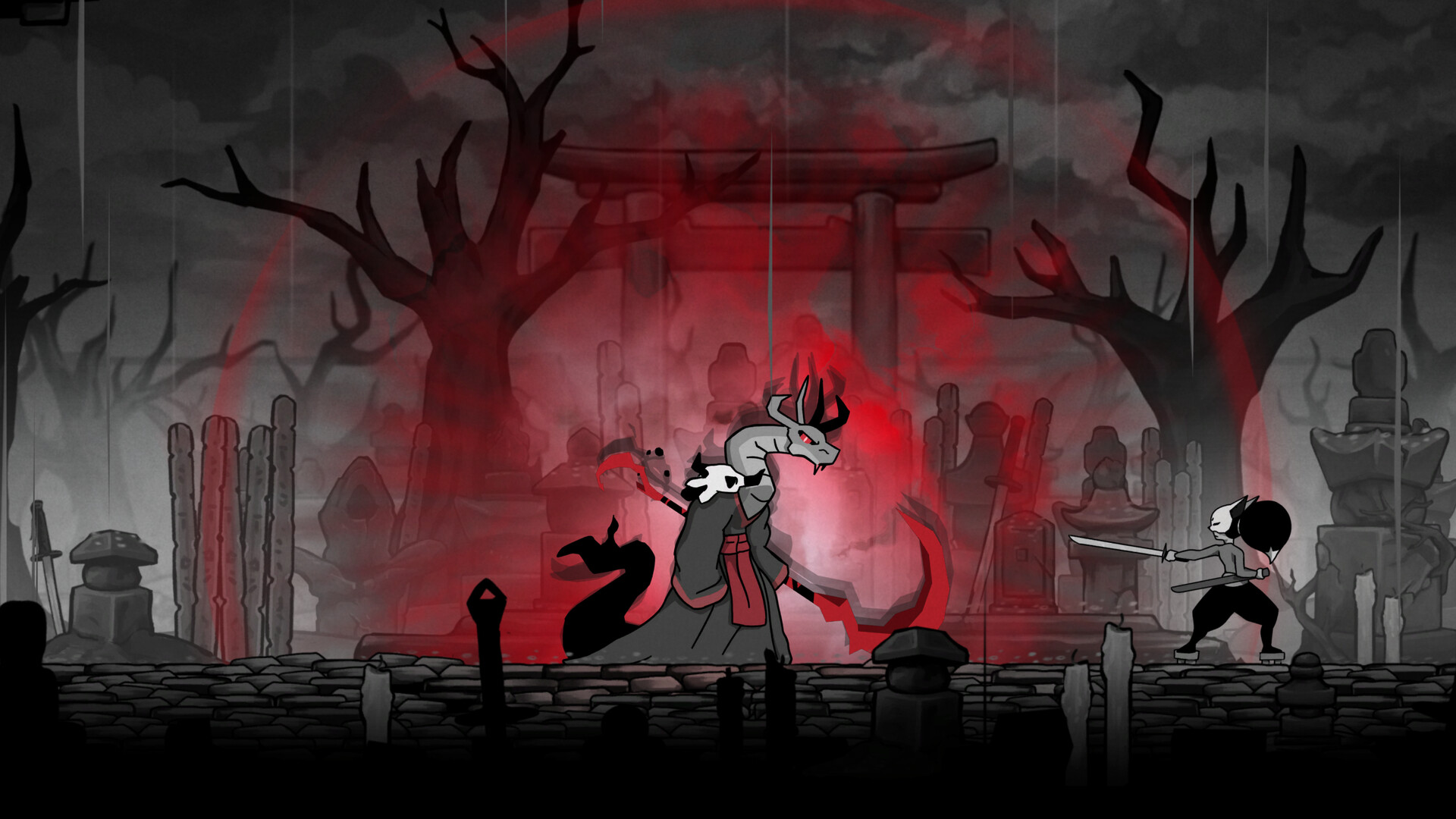
The heart of Gurei is deceptively simple: you enter an arena, learn the telegraphs, and dance around attacks until you find the opening. Combat is built around a tight toolkit — sword strikes, dodges, a head stomp and a handful of special moves — but the spice comes from the skills you steal from each defeated Kami. You’ll chain dashes, execute enemies with new weapons, heal at clutch moments or otherwise rewire your approach based on which powers you’ve unlocked. You have a limited pool of lives and when you run out you restart, but progression is psychological: every run teaches you timings, attack windows and which boss order suits your style.
Power by Choice
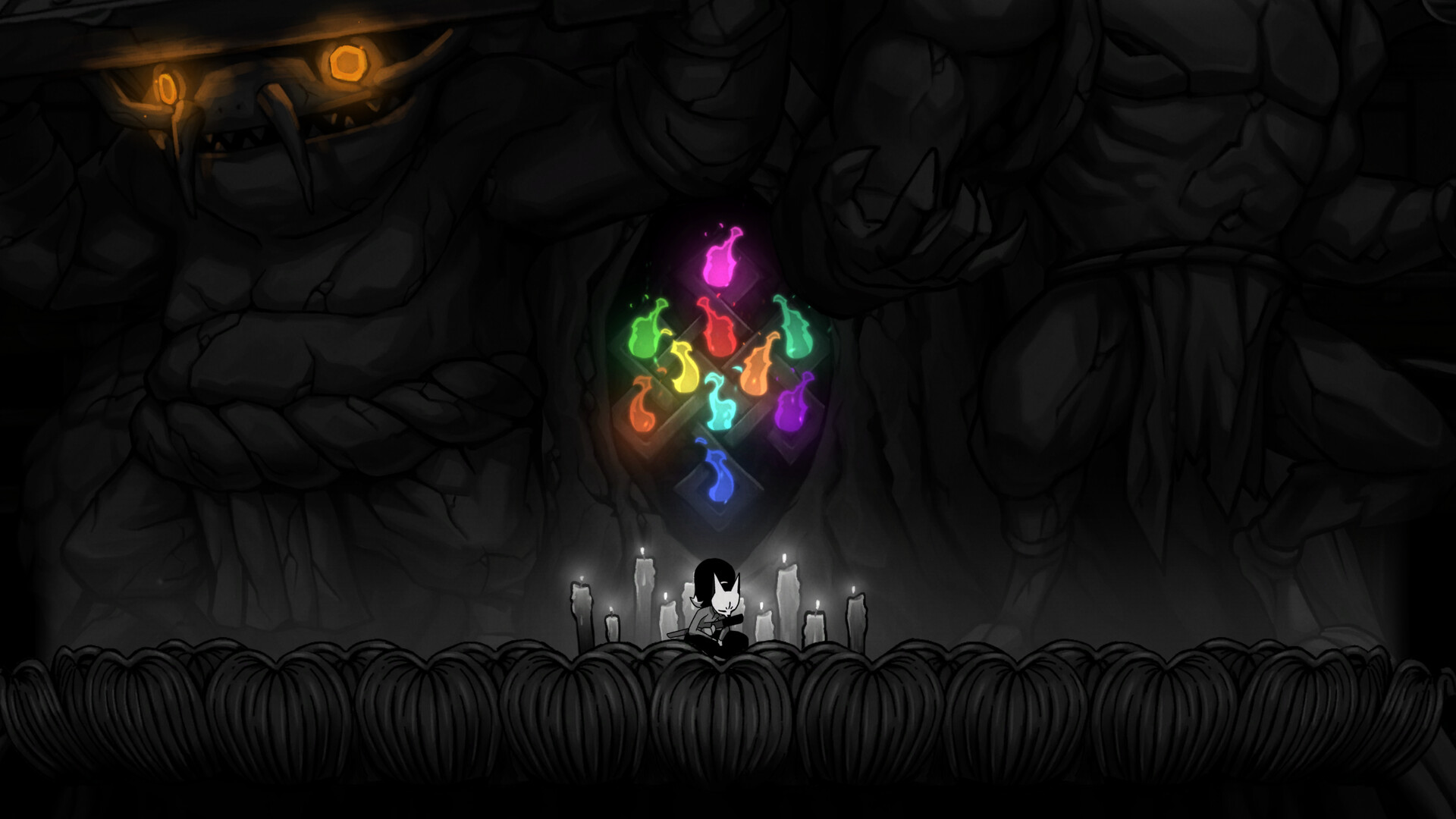
What makes Gurei stand out is the dynamic difficulty tied to your path. Killing a Kami not only grants you its ability but also turns up the screws on the remaining bosses — more HP, new patterns, nastier mixups. That choice creates genuine strategic map‑play: do you take down the hammer‑Kami early for a crushing skill even though it’ll beef up the others, or do you save it for later and struggle through raw fights? The defeated Kami also follow Rei around and comment on events, adding personality and useful (or hilariously useless) hints. There are side objectives and hidden interactions in the lobby that reward exploration, which is nice in a game that could have been pure arenas and nothing else.
Ink and Echoes
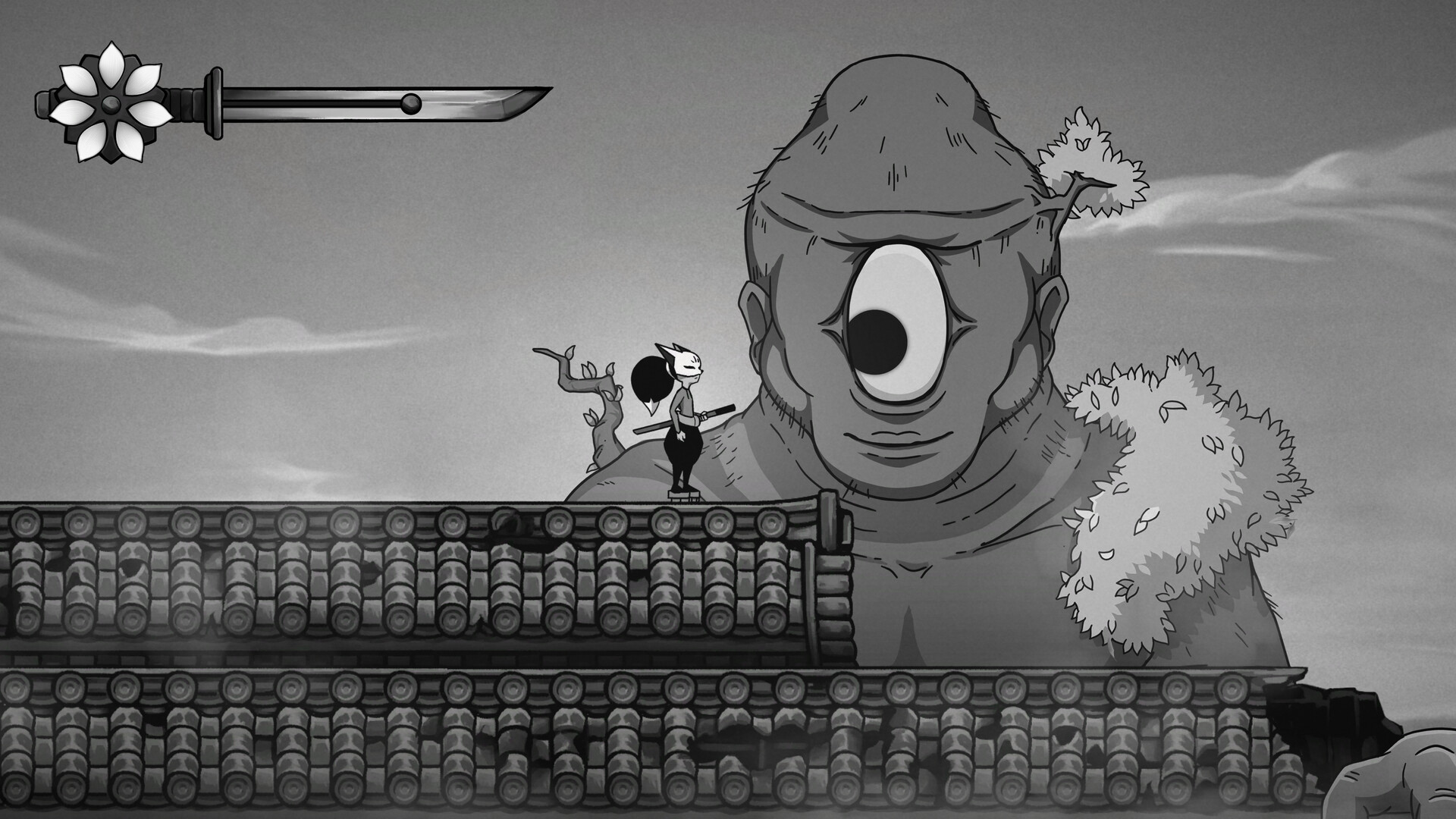
Visually Gurei opts for a high‑contrast, almost sumi‑ink palette that makes each boss silhouette pop. The hand‑drawn animations are buttery and give the combat a satisfying weight — hits feel earned. Audio complements the action well: each arena has a track that raises your heartbeat when it needs to, and voice‑less character chatter sells personality without bloat. On my Windows rig performance was rock‑stable and I didn’t notice input latency; a few players report odd i‑frame timings on certain moves, which can feel inconsistent. Accessibility options are modest but the game’s core is so tight that most frustrations stem from design intent rather than technical failings.

Gurei is a smart, stylish twist on the boss‑rush formula. It rewards patience, memorization and clever routing, and its tight combat and memorable bosses make the frustration worth it for many players. If you’re into difficult 2D fights, inventive mechanics and a moody, hand‑drawn presentation, this is a small gem worth exploring — but be ready to walk between arenas and occasionally get very, very angry (in the best way).


Pros
- Inventive dynamic difficulty that makes routing meaningful
- Tight, responsive 2D combat with satisfying animations
- Stylish art and a clutch soundtrack that sell each encounter
- Great replayability thanks to powers, secrets and boss permutations
Cons
- Walking between bosses and overworld ledges can feel tedious
- Occasional inconsistent i‑frames and a few brutally unfair encounters
- Limited accessibility options — steep learning curve for newcomers
Player Opinion
Players repeatedly praise Gurei’s boss design, art and soundtrack — many reviews call the fights ‘rhythmic’ and ‘satisfying’ once you learn the patterns. The dynamic difficulty and the ability‑steal mechanic are frequently highlighted as clever, giving runs a puzzle‑like quality in how you route bosses. On the negative side, several users find the walking and overworld traversal annoying after multiple runs, and a handful of encounters (notably a parry challenge and a late monkey boss) are described as frustrating to the point of rage. A few reports mention odd i‑frame behavior on specific moves, which can feel inconsistent. Overall sentiment in the community is strongly positive: if you enjoy tuned, repeatable boss fights and experimentation, this is one to try.