How To Grow a Black Hole Review â Addictive Idle Space Sim
A chill but chaotic incremental about feeding, upgrading and barely controlling a cosmic void. Great visuals and progression, but patchy performance and an AI-esque UI keep it from being flawless.
I booted up How To Grow a Black Hole expecting a cute idle toy and ended up strangely invested in the emotional life of a slowly expanding singularity. Itâs the kind of microgame that flirts with cosmic horror while offering the comfort of crunchy numbers and steady upgrades. If you like watching huge numbers spiral upward on a second monitor while sipping coffee, this one scratches that exact itch. Just be warned: the game looks gorgeous but a handful of players hit rough performance cliffs that can spoil the mood.

Feeding the Abyss
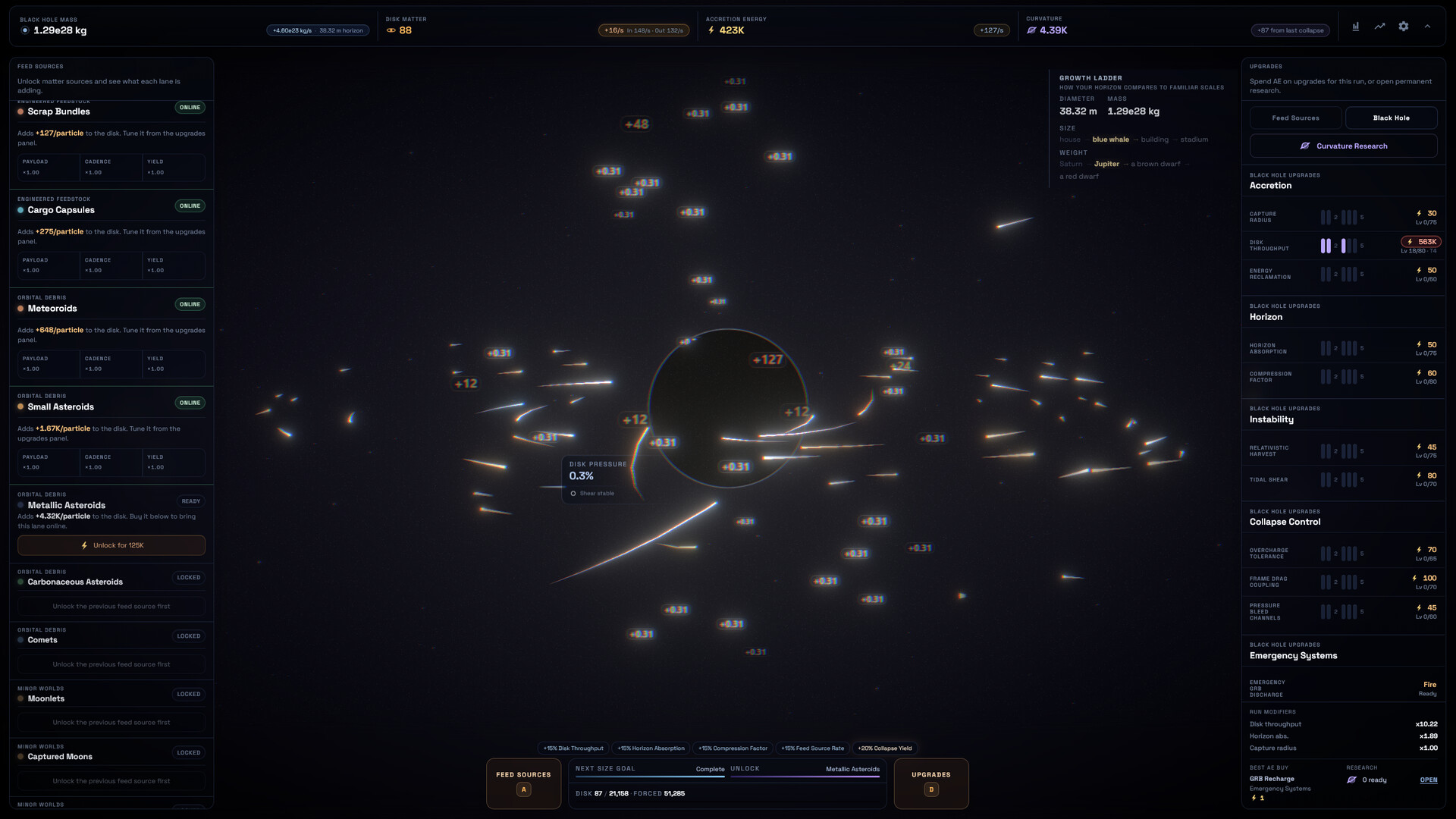
The core of How To Grow a Black Hole is gloriously simple and quietly deranged: you feed your tiny singularity things, watch its mass rise, and then feed it bigger things as more options unlock. Early gameplay consists of clicking or idling to shove asteroids, planets and eventually weirder cosmic junk into the maw while you monitor a handful of metersâmass, stability, and a cheeky âcollapseâ risk that forces you to balance greed with safety. Progression is driven by upgrades and research nodes that boost intake, automate feeding, and multiply output in pleasingly exponential ways. The loop is fast to learn but deceptively deep: youâll soon be juggling timers, automation priorities, and decisions about when to trigger a deliberate collapse for better long-term gains. Thereâs a satisfying dopamine rhythm to watching numbers cross thresholds and unlock new, ridiculous units of mass compared to real-world objects. Itâs an idle game at heart, but with just enough player agency to keep me leaning in rather than zoning out.
Chaos, Automation and Research Gone Cosmic
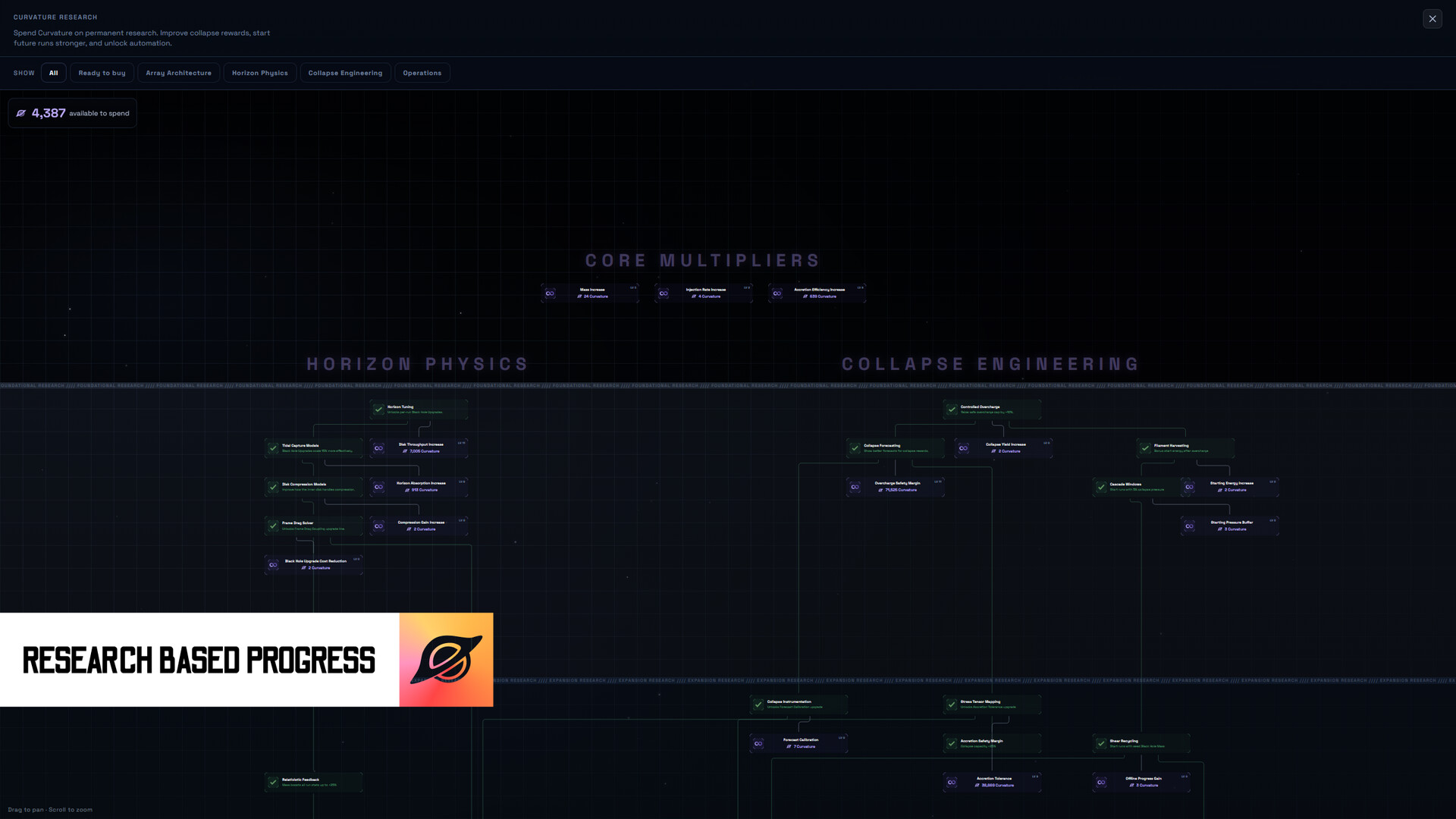
What lifts the title above a generic clicker is how the upgrade and research systems layer together: passive multipliers, active modifiers and research trees that let you automate different feeding strategies. There are deliberate design choices that encourage risky playsâpush the black hole too hard and you get a catastrophic collapse, but those collapses are part of the meta loop and often unlock stronger long-term bonuses. I enjoyed tinkering with automation presets and watching the hole run itself while I fiddled with priorities; it feels like setting up a tiny factory of destruction and then admiring the chaos you engineered. Leaderboards and friend competition add a thin competitive streak that turns âhow big can you make itâ into a bragging right. The game occasionally revels in absurdity, offering bite-sized black hole facts and cheeky achievement names that made me smile mid-run.
A Pretty Void â Visuals, Sound and Rough Edges
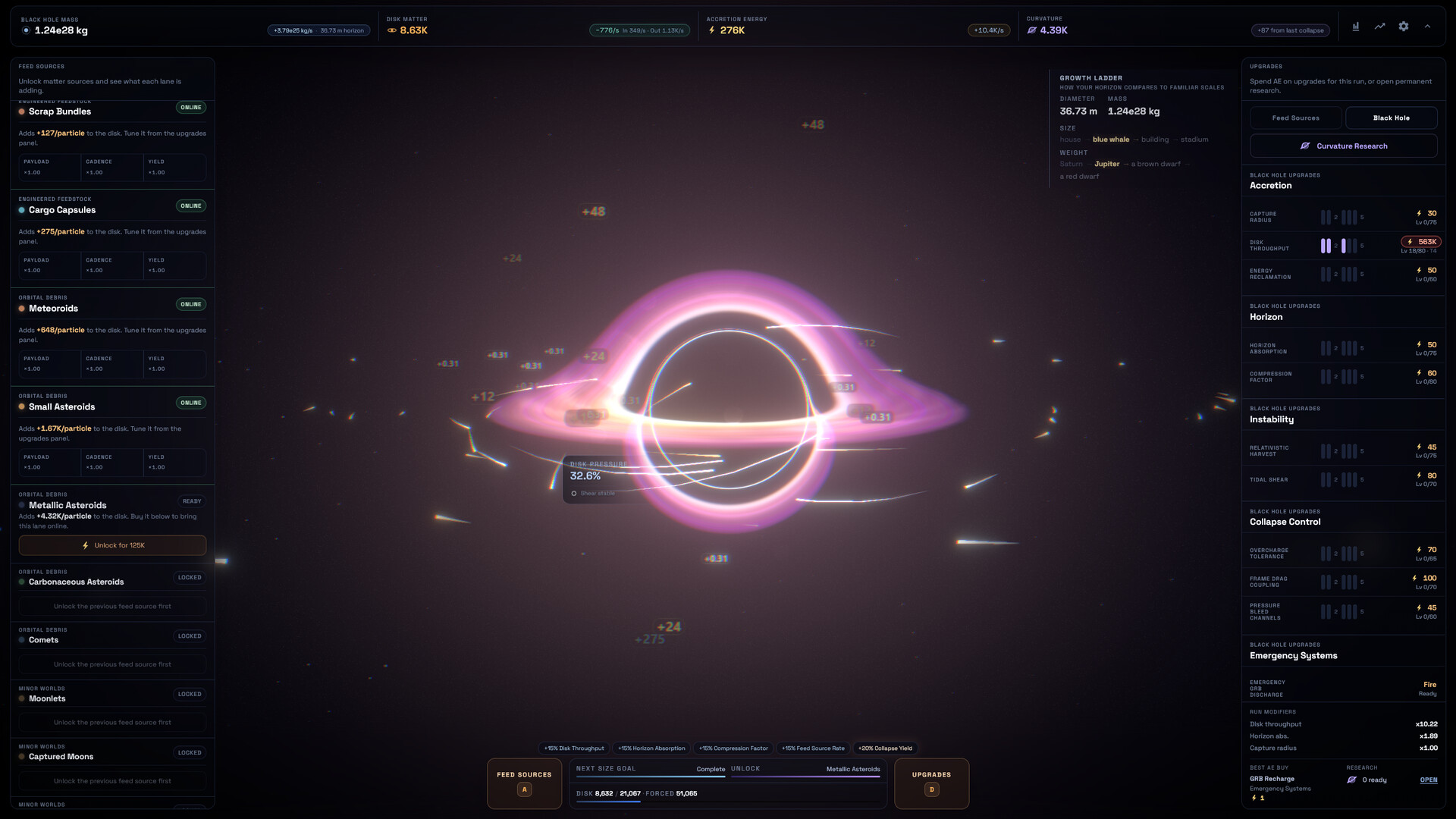
Visually, the game is a treat: swirling accretion disks, tasteful particle effects and a color palette that sells the cosmic mood without being gaudy. Sound design adds weightâliteral low rumbles and soft chimes when milestones hitâso plopping a planet into your hole feels satisfyingly dramatic. However, the presentation isnât flawless: a fair number of players cite an AI-generated vibe in the UI, with some elements feeling generic or duplicated, and the scaling at very high resolutions can be awkward. Performance is the other big technical caveatâwhile many run the game fine, several users report severe FPS and CPU issues that leak into real-world frustration, so expect occasional patches. Accessibility wise, thereâs a solid tutorial and clear progression in the early game, but late-game screens can feel dense and could benefit from clearer tooltips and toggleable options for auto-collapse mechanics.

How To Grow a Black Hole is a clever, often delightful incremental with gorgeous presentation and a surprisingly thoughtful risk/reward loop. Itâs great for fans of idle and simulation games who like numbers that get stupidly largeâand it works wonderfully as a chill distraction or a leaderboard grind. Just be aware of real performance and UX complaints; if those are dealbreakers, wait for patches, otherwise this tiny cosmic experiment is worth a shot.


Pros
- Beautiful visuals and atmospheric sound design
- Satisfying incremental progression with clever research layers
- Accessible idle loop with meaningful player decisions
- Leaderboards and social competition add replay value
Cons
- Notable performance issues on some systems (CPU/FPS spikes)
- UI can feel generic or AI-generated and scales poorly at extremes
- Late-game screens get dense; better tooltips/toggles needed
Player Opinion
Players are wildly split but consistent about the same things: many praise the loop, visuals, and satisfying number-crunch of growth and collapse, calling it oddly addictive and great for background or focused play. Others are vocal about severe performance issuesâreports of high CPU temps, ignored frame caps and frame drops appear repeatedly and have soured some players' impressions. The UI also drew note: some find it clean and futuristic, while a vocal minority complains the menus look AI-generated, cluttered or hard to read at high resolutions. Tutorial and early-game clarity are generally praised, but several reviews point out that resets feel too fast and late-game progression can stagnate without clear feedback. If you love incremental games and tolerate occasional rough edges or hope for patches, you'll likely enjoy it; if you expect a perfectly polished UI and rock-solid optimization out of the gate, temper expectations.