




Kinny and the Cosmic Cauldron Review – Chaotic Deck-Building Cooking Roguelike
A witch-chef roguelike that blends deck-building with bumping-physics in a charming pixel-art cauldron. Cute, chaotic and surprisingly strategic — but currently rough around controller support and balance.
I didn’t expect to fall for a game where you literally throw bouncing ingredients into a cauldron, but Kinny and the Cosmic Cauldron has a way of turning kitchen chaos into an oddly satisfying loop. It’s a cozy, slightly macabre premise — you’re a witch-chef feeding eldritch customers or becoming the meal — wrapped in cute 2D pixel art that belies surprisingly deep mechanics. If you’ve enjoyed Suika-style merging or slot-roguelikes like Luck Be a Landlord, this scratches a similar itch with its own physics-driven spin. The game’s charm is immediate, even when the balance and controller quirks remind you it’s an indie in active development.

Cauldron Chaos: Drop, Bounce, Combine
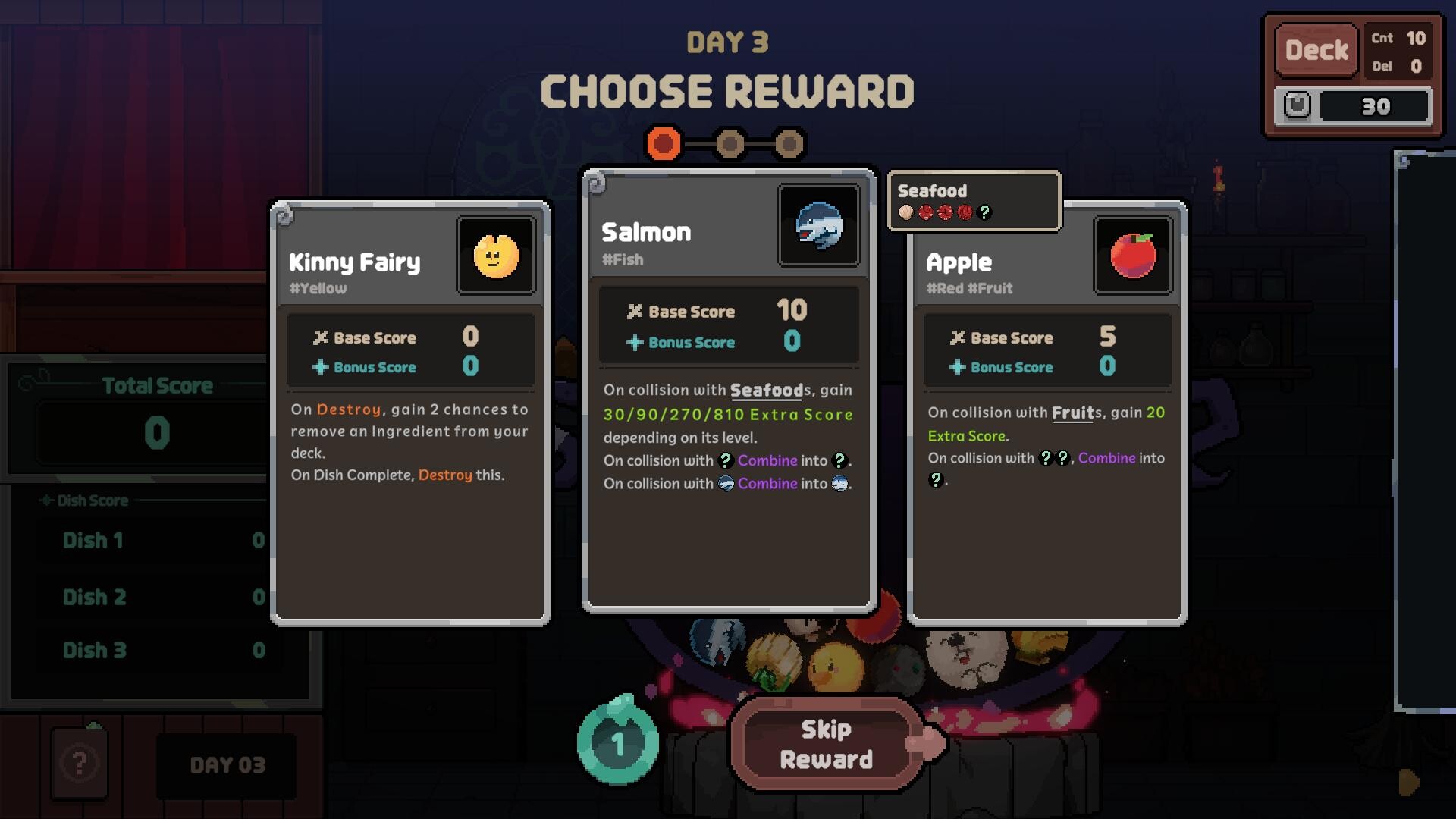
The core loop of Kinny and the Cosmic Cauldron is gloriously simple to describe and devilishly complex to master: you drop ingredients into a bubbling pot, watch them bounce, collide and transform, and try to reach a target score before your attempts run out. Each ingredient behaves according to its own quirks — fruits like apples and grapes pair nicely with each other while beasts and fish have their own scoring families — and those interactions are the real meat of every run. Runs are short and punchy: you’ll take three tries to hit a customer’s target and can earn sweet bonuses for efficiency, which keeps the tempo brisk and the stakes immediate. Playing feels like being part chef, part casino dealer; there’s a satisfying tension between the randomness of the physics and the strategic choices you make between drops. I found myself leaning into builds that favored certain families of ingredients and then praying the RNG would cooperate — that mix of hope and chaos is addictive.
Deckcrafting Meets Kitchen Alchemy
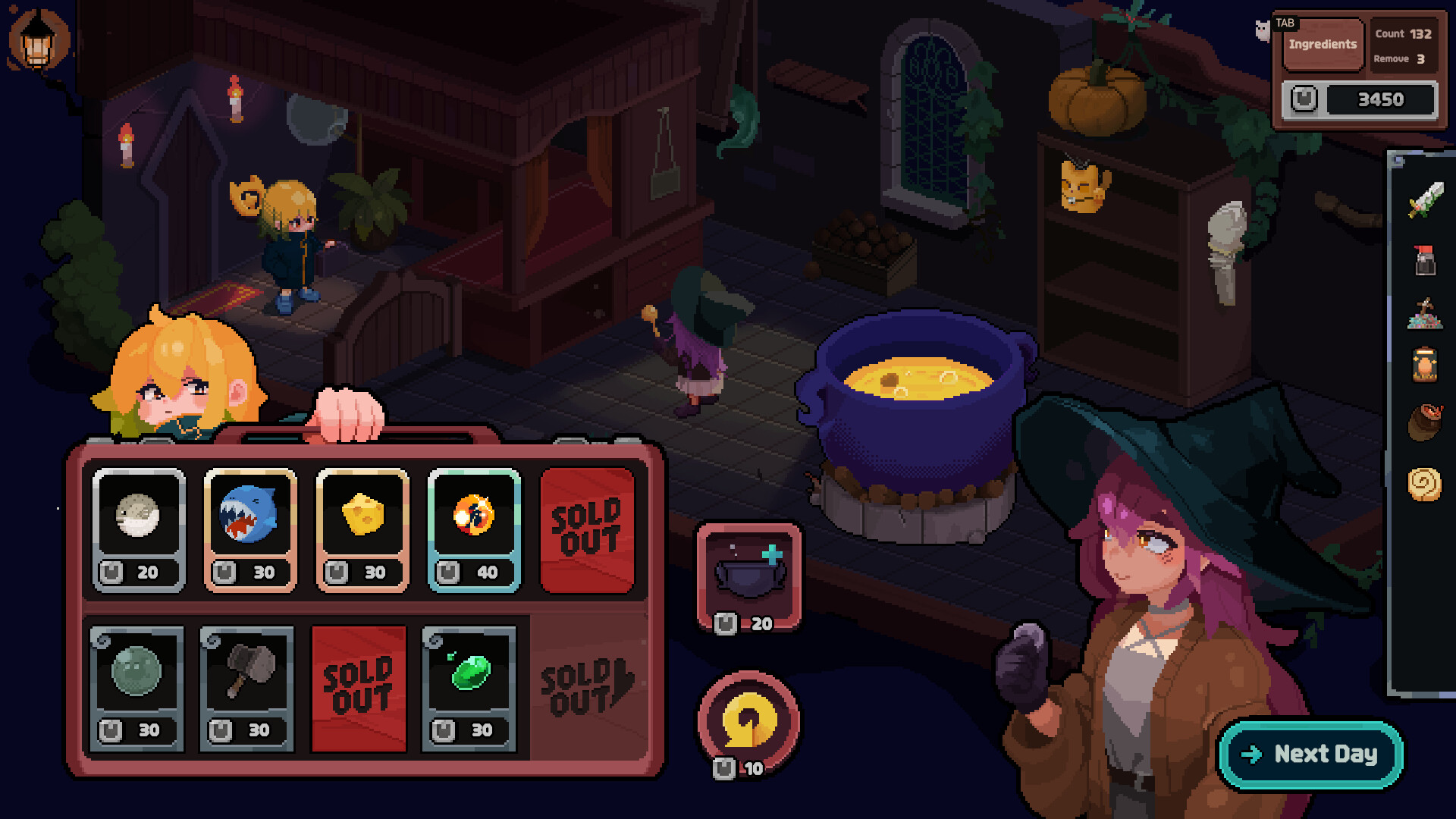
Where this game stands out is its deck-building layer; between rounds you build a collection of possible ingredient drops and pick relics or cauldron upgrades that bias future runs. It’s not just about stacking the best items — you’re crafting synergies, managing the probabilities of seeing particular ingredient types, and sometimes deciding whether to chase a flashy combo or steady, repeatable scoring. I like how the shop and relics can pivot a run: suddenly a mediocre ingredient becomes an engine because a relic tweaks how it interacts, and those “aha” moments are glorious. That said, some of the community feedback about pacing is valid — I’d welcome a few earlier branching choices so you don’t feel railroaded into randomness before a build forms. Still, once a comfy build clicks, the runs can feel wonderfully potent and fast-paced.
Pixel Charms and Cosmic Soundscapes
Visually, the game leans into hand-drawn pixel art that is both adorable and a touch weird, which suits the eldritch kitchen theme perfectly; ingredients have personality and the animations make bouncing items genuinely fun to watch. Audio is understated but effective — little plinks and splashes punctuate each collision, the soundtrack stays in the background without overstaying, and customer cues are clear. Performance on my PC was solid and the UI is clean, though I can confirm several players report controller support issues and missing options like finer keybinds or display settings; those are functional drawbacks rather than aesthetic ones. Accessibility is decent — clear iconography and readable numbers — but options for controller mapping, brightness and higher-resolution outputs would improve the experience for more players.

Kinny and the Cosmic Cauldron is a delightful little roguelike that turns kitchen chaos into thoughtful play, and I had a blast hunting for combos and building weird but effective decks. If you enjoy physics-driven merge games and short, rewarding runs, pick this up — just be aware the controller experience and some balancing still need polish. For twelve bucks, it’s an easy recommendation for players who like cute aesthetics with a crunchy strategic bite; I’ll be watching developer updates closely.







Pros
- Addictive physics-driven loop that turns RNG into strategy
- Charming hand-drawn pixel art and delightful animations
- Deep deck-building and relic interactions that reward experimentation
- Short, punchy runs that are great for quick sessions
Cons
- Controller support and keybinding options are currently poor
- Some balance issues and perceived late-game build surfacing
- Could use more long-term progression for extended replayability
Player Opinion
Players consistently praise the art, the cute character designs, and the satisfying spectacle of ingredients bouncing and combining, with many likening the feel to Suika or Luck Be a Landlord. Several reviewers highlighted how quick runs and the variety of ingredients make each playthrough fun and replayable, though some warned that the game’s content might be exhausted after a handful of hours without additional modes. Criticisms focus on controller support — despite being Steam Deck verified, many users report gamepad input is unreliable or missing keybinds — and on balance issues where some ingredient families feel strictly stronger than others. A common request is for earlier, more meaningful choices during runs so builds can form sooner and feel less dependent on luck. Overall the community tone skews positive: people enjoy the core loop and graphic polish, but hope for quality-of-life patches.