The Life and Suffering of Prince Jerian Review – A Harrowing Throne of Choices
A thoughtful, grim narrative RPG that turns rulership into a constant moral calculus — brilliant writing, thorny choices, but not without technical and asset controversies.
I went into Prince Jerian expecting a darker, grander echo of Sir Brante — what I found was an even more intricate political theatre where every promise and whisper shapes the fate of an empire. The game nails the sensation of being powerful but limited: you have the crown’s weight and few safe choices. If you like slow-burning, character-first RPGs that force you to sit with your decisions, this one hooks you hard and doesn’t let go.

Balancing the Crown: Decisions That Actually Hurt
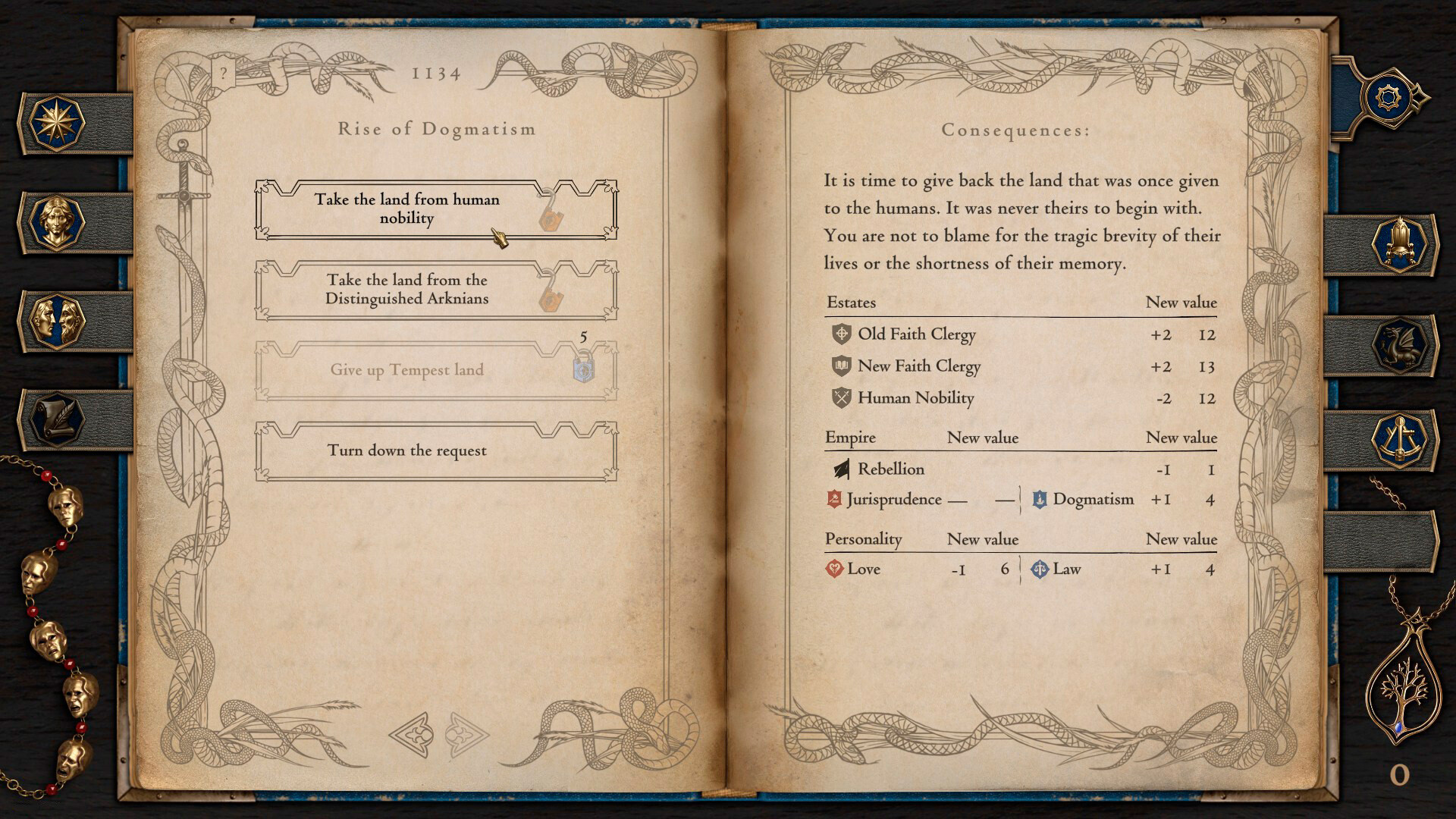
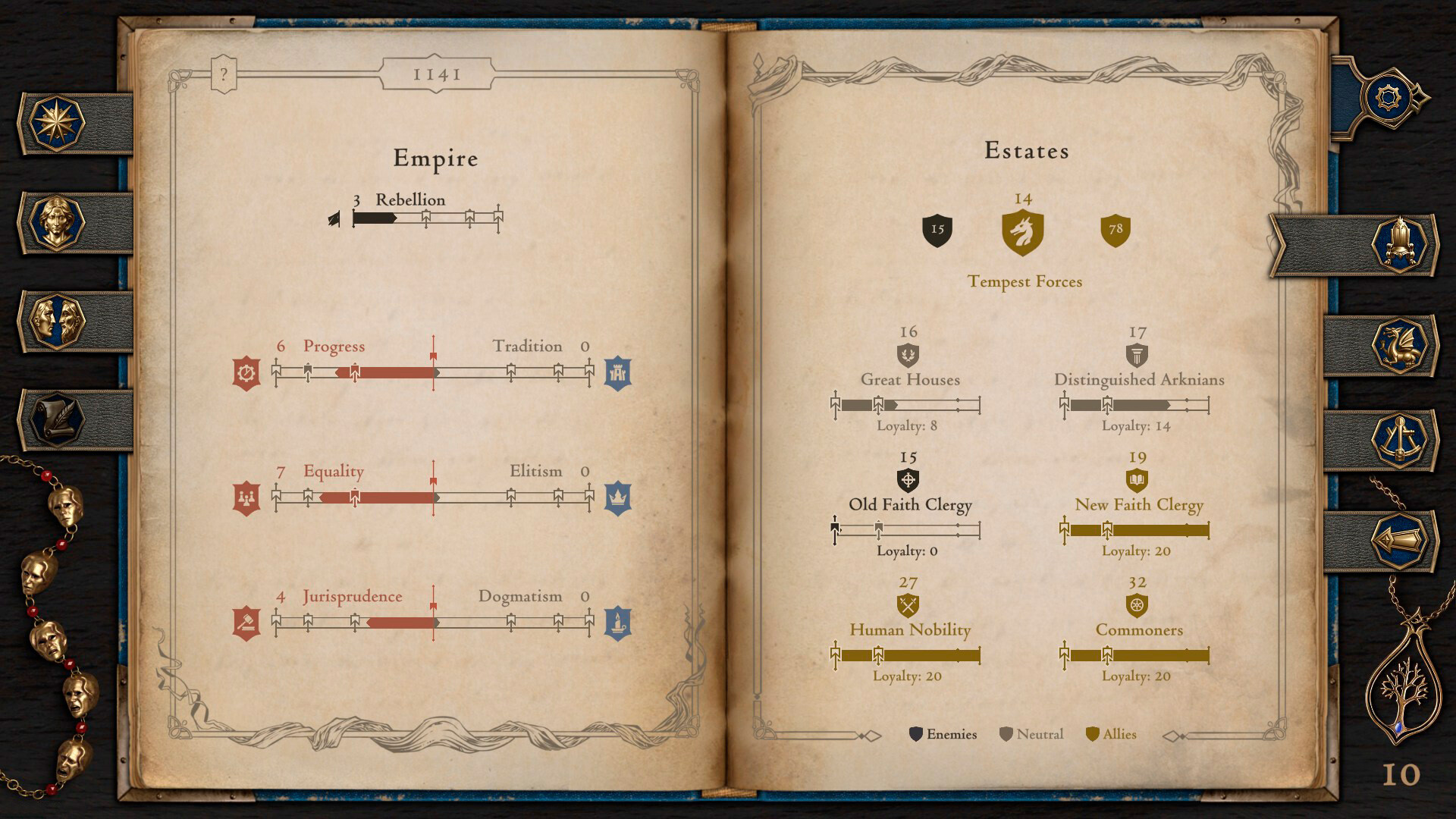
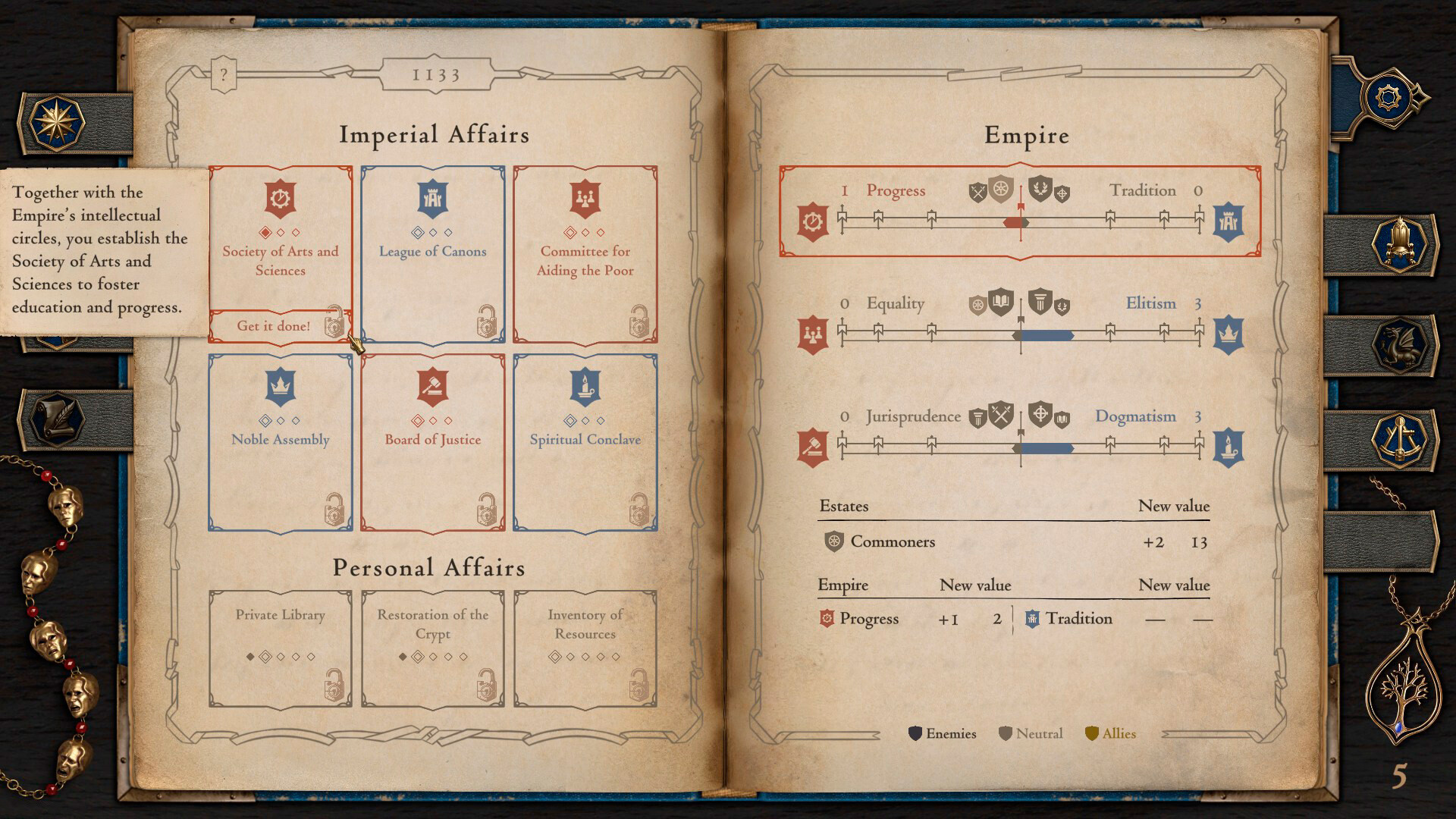
The core gameplay is a heavy, text-driven juggling act: you read, you choose, and the outcomes ripple through your estates, family and clergy. Most moments are not about picking A over B for a shiny reward — they're about weighing loyalties. I remember one scene where I was asked to pardon suspected rebels: refusing protected aristocratic order but enraged peasants, while granting a blanket amnesty stabilized the commons but defanged certain noble allies. The interface tracks your personality, family and empire traits on scales (roughly -10 to +10), and many events unlock only when you hit thresholds — which makes planning feel almost like micro-politicking. You’ll spend as much time reading memos and council minutes as you do in dramatic cutscenes; the rhythm rewards patience over button-mashing.
The Primate, the Tempest Legacy, and the Little Engine That Is Your Agency
What lifts Prince Jerian beyond mere branching dialogue are the unique mechanics tied to your role. As the Primate you manage the Tempest Legacy — a legacy resource and set of options that lets you bend ritual, faith and divine opinion when you pay the price. There’s also a sanity/recourse mechanic (Tempest Legacy or mental health pool) you can expend to force choices in desperate moments. A concrete example: in Chapter Two, an intimate family scene required high empathy or the use of a sanity point to reconcile a parent’s dream; I chose to spend legacy once to keep a coalition intact and later paid with restricted options in the final arc. These systems create interesting trade-offs: you can brute-force an outcome now, but the ledger remembers. Also present are estate management and faction standing — subtle meters, not spreadsheets, that produce surprising narrative beats (like a sudden decision where your earlier refusal to help a minor noble returns to bite you in council).
Paper, Pixels and Performance: Presentation and Platform Realities
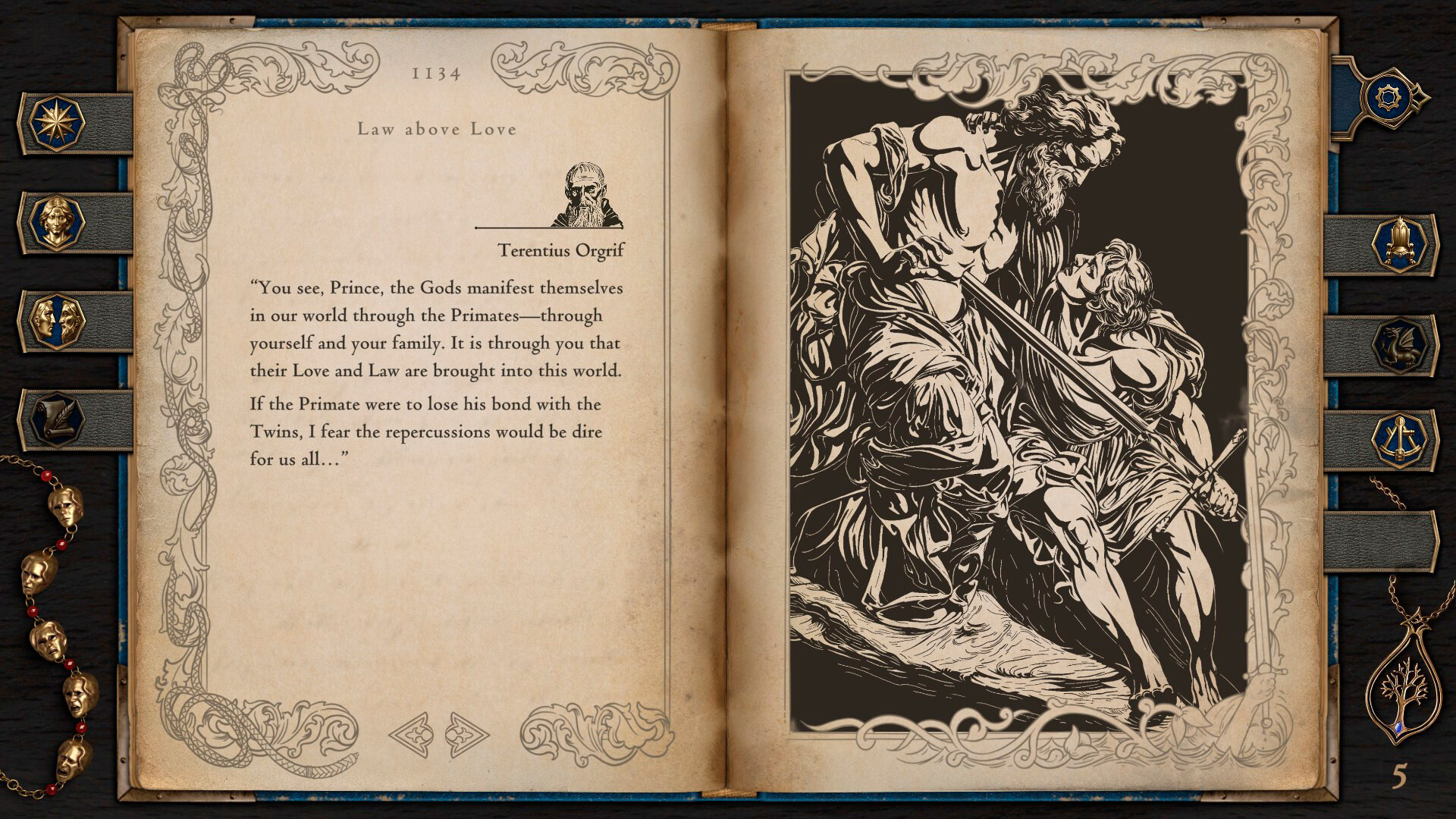
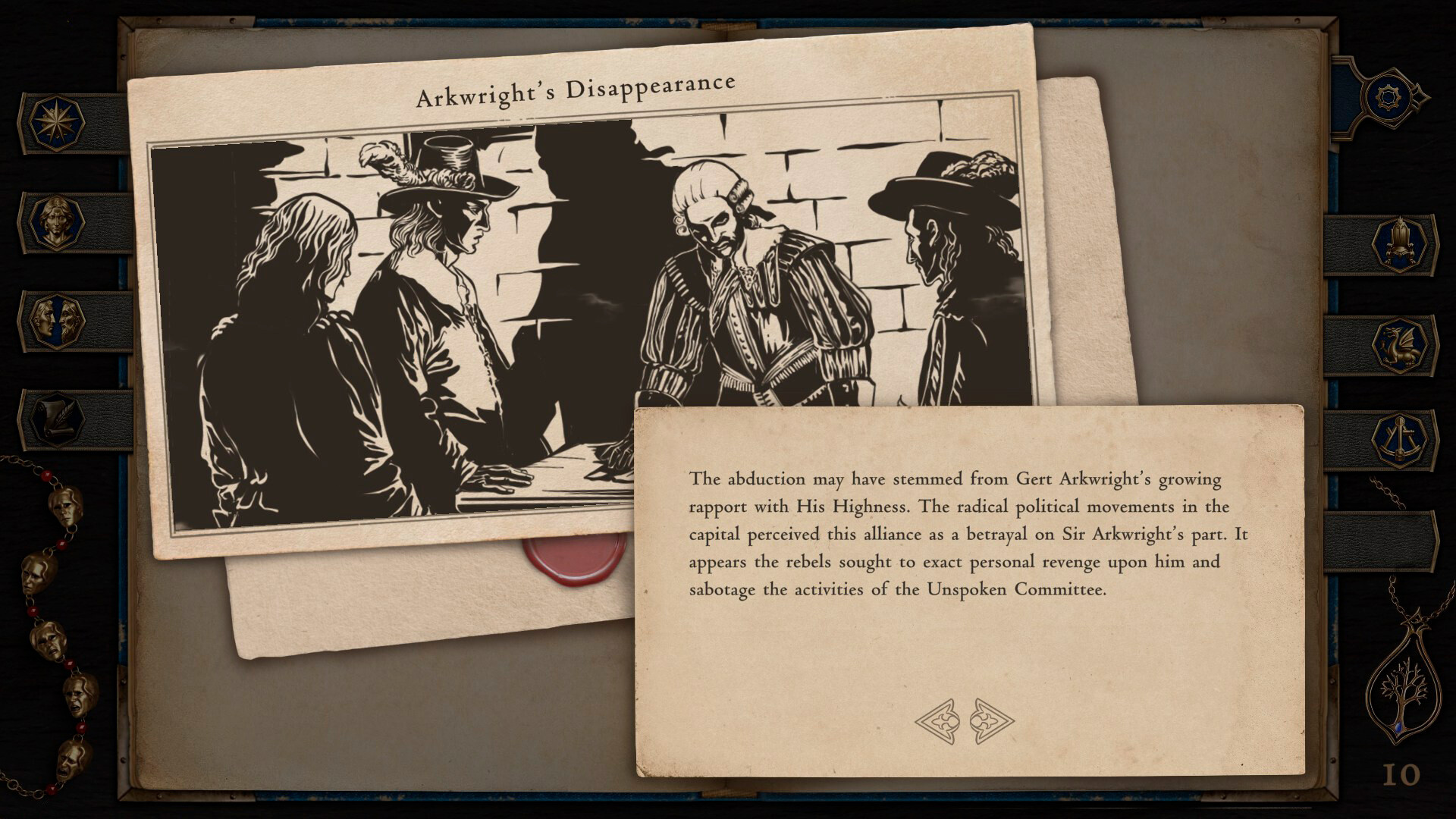
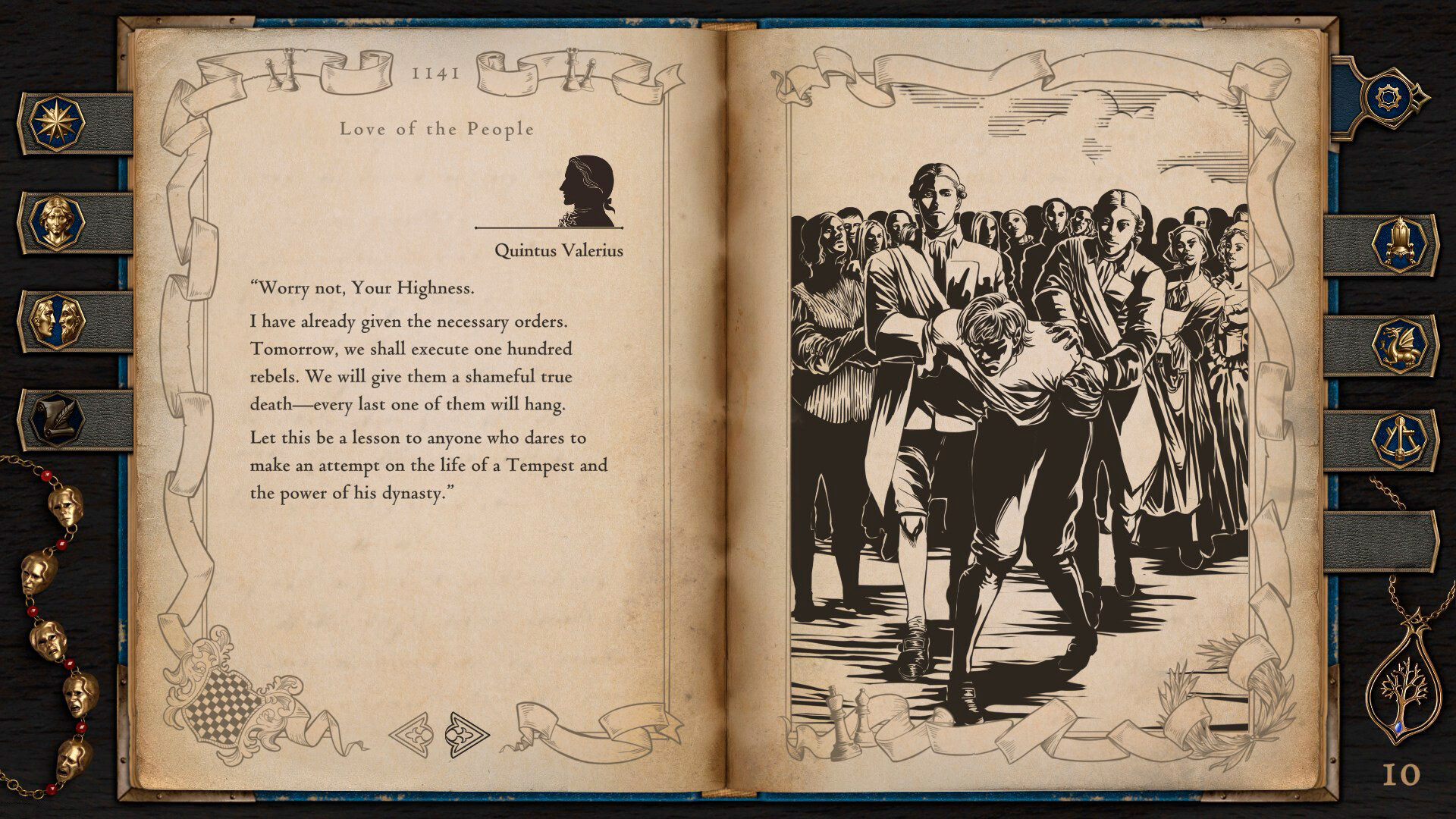
Visually the game keeps the austere, hand-drawn aesthetic of its predecessor: simple portraits, evocative background cards and spot illustrations that lean into the world’s grim tone. Sound design and the melancholic score do a lot of emotional heavy-lifting in quiet scenes. On the tech side, the game is Windows-first: many players reported scaling/UI problems, Steam Deck crashes or Linux video codec failures — and I hit a scaling quirk on a 1440p monitor where some text overflowed UI boxes. Performance is otherwise stable on a mid-range Windows machine, but accessibility could be improved (larger font options, clearer color-contrast for choice highlights). Finally, be aware of the community debate about some undisclosed AI assets; whether you find it immersion-breaking will depend on your sensitivity to art sources, but the narrative and writing remain the main draw.

Prince Jerian is a rare modern gothic of politics — bleak, elegant and frequently brutal in its moral choices. I recommend it to story-first players who love dense lore and hard trade-offs; its mechanical additions actually broaden possible approaches and make repeat playthroughs rewarding. Caveats: investigate platform support if you run Linux/Deck and decide for yourself how you feel about the AI-art debate. Meta: combined word count for Introduction + Gameplay + User Opinions + Conclusion (EN) = 677 words.


Pros
- Dense, morally complex writing that builds real emotional weight
- Meaningful trade-offs via Tempest Legacy and faction meters
- Great worldbuilding and dozens of legitimate endings
- Improved mechanics vs. Sir Brante — more player agency
Cons
- Controversy over undisclosed AI art/assets that some find immersion-breaking
- Windows-only focus: Steam Deck/Linux video and scaling issues reported
- Occasional UI quirks and readability problems on high-res displays
Player Opinion
Players overwhelmingly praise the writing and the game's ability to make choices feel consequential — many called the lore expansion and character work a high point compared to the first game. Recurrent praise goes to the new mechanics (Tempest Legacy/sanity options) which give you more ways to tackle sticky situations without turning the game into a puzzle. On the critique side, several reviews flagged undisclosed AI art usage and low-effort assets, with a vocal minority saying this undermines the craft. Technical complaints are common: Linux and Steam Deck users report video/codec failures and crashes, while some Windows players noted scaling/UI oddities. If you valued Sir Brante you’ll likely love this; if you’re sensitive to asset provenance or need Linux/Deck support, proceed with caution.