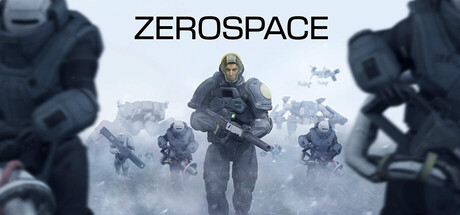
ZeroSpace Early Access guide: Which mode should you start with?
Campaign, skirmish, Galactic War, co-op, and PvP compete for your time in ZeroSpace. This guide explains the best first stop and who should wait for more Early Access updates.
Start with skirmish against AI if you are learning ZeroSpace. It gives you a controlled place to understand production, faction basics, heroes, and army movement before the wider systems compete for your attention. The current Early Access information lists eight AI difficulty settings, so this route can grow with your confidence.
Move to Galactic War next if co-op is the reason you bought the game. Its ten missions feed into a shared territorial contest, giving individual battles a purpose beyond their own objectives. Two independent hands-on reports identify this mode as ZeroSpace's most distinctive idea, even while describing the surrounding build as unfinished.
Treat the campaign as a preview of a larger story rather than a finished solo package. Choose PvP first only if learning matchups and build timing is already your main interest. If you want a polished campaign, a settled interface, or a feature-complete strategy game, waiting remains the safer decision.
This is a guide to choosing among the current modes as of August 14, 2026. It does not replace the existing scored review, and Early Access details can change with patches.
What is actually available now
ZeroSpace entered Early Access on July 20, 2026 for Windows. Starlance Studios and Ironward describe it as a science-fiction RTS with RPG choices, traditional base building, hero units, competitive matches, co-op, and a seasonal galactic layer. That breadth is its main attraction, but it also explains why the opening menu can feel less obvious than in a focused campaign RTS.
The current Steam Early Access section lists 13 campaign story missions, 10 procedurally varied co-op missions, skirmish against eight AI difficulties or other players, four main factions, six mercenary factions, and ten heroes. Independent launch coverage calls the campaign a 12-mission first act. Because those counts differ, the current store figure is the better snapshot, while the underlying point stays the same: the available story is an opening portion, not the planned complete campaign.
The full version is expected to add missions, maps that support larger team matches, factions, co-op commanders, mercenaries, and a broader Galactic War. The studio estimates about a year in Early Access but explicitly leaves room for that plan to change with development and feedback. Buy for the modes that exist, not for a deadline or a promised future total.
Learn the rules in skirmish
Skirmish is the least distracting first stop. You can concentrate on gathering resources, producing units, expanding, and reading a battle without campaign dialogue or a persistent map around the match. PC Gamer found the economy and unit control more streamlined than many classic RTS games, while also noting that busy fights can be difficult to read through the current interface. A lower AI setting gives you space to separate those two issues: learning the game and learning to work around the presentation.
Use the first matches to answer practical questions. Which production structures are easy to forget? How quickly can your faction replace losses? When does a hero support the army rather than lead it alone? Which control groups keep infantry, siege units, and air units legible? Once those actions stop consuming all your attention, the more elaborate modes make much more sense.
This route is especially sensible for newcomers to real-time strategy. Experienced players can shorten it, but even they benefit from one match before entering a mode with shared progression or human opponents.
Choose Galactic War for co-op with context
Galactic War is the strongest reason to play ZeroSpace before 1.0. Players join an alliance, complete co-op missions, and contribute to control of a shared galaxy. The current build includes ten co-op missions with varied enemy compositions and objectives. The result sits between a mission-based co-op mode and a persistent community campaign.
Massively Overpowered's late July hands-on praised the mission variety and the way offensive and defensive tasks meet inside the same scenario. It also found unfinished currencies, inactive-looking planetary systems, bugs, and too few playable commanders for long-term variety at that point. PC Gamer likewise considered the competitive shared map a compelling concept, while questioning parts of its reward structure.
Those strengths and limits define the right audience. Start here if repeated co-op missions become more enjoyable when they move a larger map. Wait if your enjoyment depends on deep progression, a broad commander roster, or every surrounding system already working clearly. Seasonal state also changes, so a guide cannot guarantee that the map or alliance balance seen in one week will match the next.
Sample the campaign, but do not expect closure
The campaign combines RTS missions with dialogue choices, crew relationships, upgrades, and a science-fiction political conflict. The available first act can show whether you enjoy the faster economy and the RPG framing. It cannot deliver the complete arc that the full-version plan describes.
Independent impressions agree on the potential but differ in emphasis. PC Gamer found a promising structure, streamlined battles, and useful tactical ideas, yet called the story side underdeveloped in the tested build. Massively Overpowered was more cautious and chose to wait for the campaign to be completed after encountering or hearing about unfinished elements. Neither assessment supports treating the current act as a finished single-player release.
Play it now if experimenting with choices and mission systems is enough. Wait if narrative payoff is your main purchase reason, if you dislike replaying an opening act after major revisions, or if technical roughness breaks immersion. Early Access can improve a campaign, but it can also change pacing, interfaces, and progression while you are partway through.
Enter PvP when competition is already the goal
ZeroSpace offers competitive play alongside its campaign and co-op modes. Its four main factions use visibly different economies and unit ideas, while heroes and mercenary choices add more combinations. That variety creates room for discovery, but it also increases the amount a new player must read during a live match.
PvP is therefore not the universal first recommendation. It is the correct first choice for players who enjoy losing while learning, studying matchups, and revising build orders after every game. Everyone else will get a cleaner introduction from AI skirmish before adding another person's pressure.
Keep the development state in mind. The late July hands-on reported incomplete presentation and restrictions around the newly added Xol faction at that time. Patches can alter those details quickly. Check the current in-game availability rather than assuming an earlier report still describes ranked play exactly.
What the recent update plan changes
The development outlook is less uncertain than it was at launch, but it is not a guarantee of polish. On August 10, Starlance said Early Access sales had funded development through the planned 1.0 release. The same community update discussed an interface redesign, optimization, bug fixing, frequent smaller patches, and larger content updates on a roughly monthly rhythm. Reported September targets include another Galactic War season, units, and additional campaign and co-op material.
There is already evidence of active maintenance. The official August 1 notes contain balance changes, Galactic War fixes, reconnect improvements, interface corrections, and localization work. That is useful evidence of movement, not proof that every rough edge will disappear on a particular date. Funding reduces one risk. It does not settle scope, balance, population, or the final schedule.
Who should play now and who should wait
Play now if you want experimental co-op RTS design, enjoy helping shape an Early Access game, and can accept uneven presentation. Galactic War gives the current build a purpose that many skirmish collections lack, while AI matches provide a sensible way to learn it. Competitive players who value new faction systems may also find plenty to study.
Wait if you mainly want the complete RPG campaign, a polished interface, a stable long-term progression loop, or confidence that every faction and commander is equally finished. Waiting is also reasonable if a healthy multiplayer population is essential to your purchase. The available sources document the design and current development response, but they cannot promise future activity levels.
Final recommendation
Begin with one or two AI skirmishes, then make Galactic War your first substantial mode. Sample the campaign only with the expectation that it is an opening act, and move into PvP when competition itself sounds enjoyable. ZeroSpace already has a rare central idea in its shared co-op war, but the present build asks players to tolerate visible construction around it. That trade is attractive for curious RTS enthusiasts and much less convincing for anyone waiting for a finished solo game.
Transparency
Sources and methodology
6 verified external sources
This article was researched using the primary and industry sources linked below. Links open in a new tab.