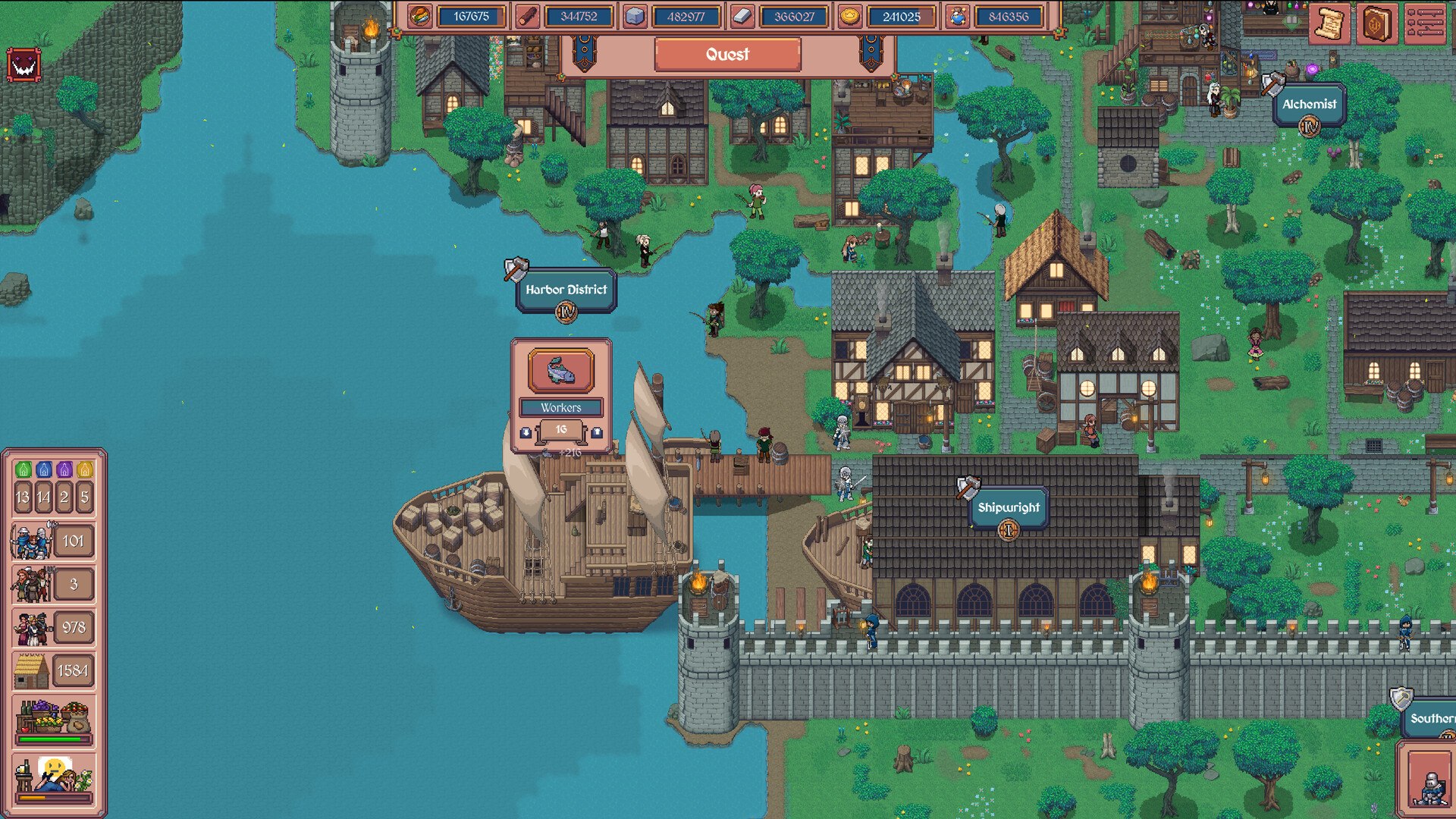
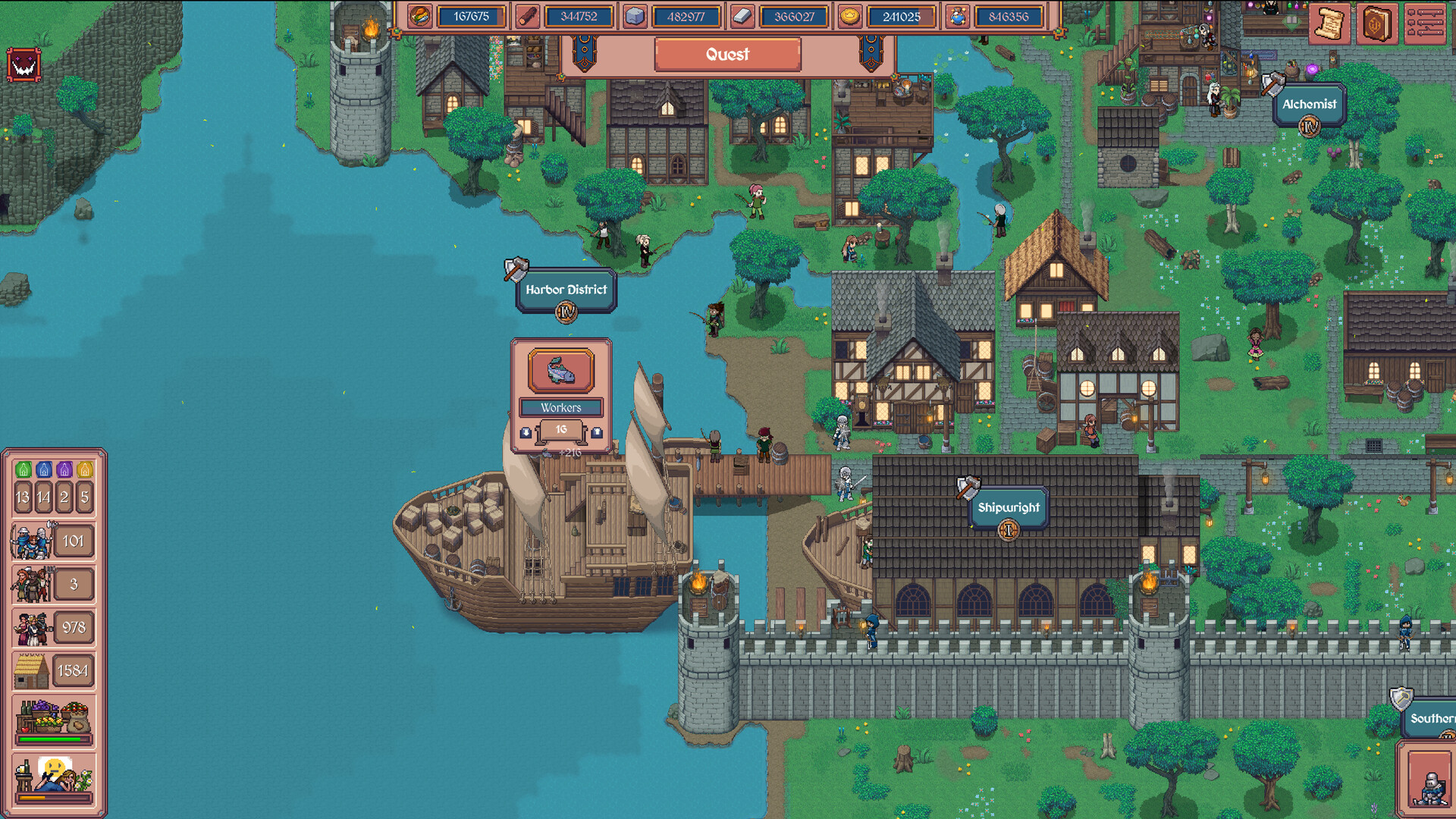
Hearth and Hamlet now has a clearer post-release picture than it did on launch day. In an official Steam announcement on August 21, the team said 50,000 people had bought and played the game during its first 24 hours. By August 22, Steam's all-language review feed showed 971 reviews, with 780 positive and 191 negative. Patches 1.0.01 and 1.0.02 also arrived within the first three days.
Those numbers make the launch notable, but they do not turn this article into a final review. The player total is the developer and publisher's own statement, while Steam reviews are a moving snapshot. What they do provide is a much firmer basis for deciding whether this calm city-builder clicker fits you now.
Updated August 22, 2026: added the official 50,000-player announcement, Steam review snapshot, patches 1.0.01 and 1.0.02, and an independent post-release review.
The short answer
Play Hearth and Hamlet now if you like patient incremental games, worker assignment, gentle resource management and watching a settlement grow while the numbers rise. Wait if you want free-form building placement, controller-first play, a demanding strategy sandbox from the opening hour or stronger proof of Linux and Steam Deck stability.
The slow beginning remains the biggest dividing line. It is not simply an idle screen, but it asks you to accept a modest opening before its broader management systems arrive.
What 50,000 players and 971 reviews actually show
The official 50,000-player post is a strong launch signal for Phorust Studios' debut. It says those players bought and played the game in the preceding 24 hours. BestOfGames cannot independently audit that sales and player count, so it should be read as a first-party milestone rather than a verified market estimate.
Steam's review API supplied a second, separate signal on August 22. Its all-language summary listed 971 reviews, 780 positive and 191 negative, with the store describing the result as Very Positive. That is much more informative than the 65-review snapshot available on launch day, but it is still early. New reviews, moderation and changing playtime can move the total.
The two signals agree on one useful point: Hearth and Hamlet has attracted enough players to reveal more than a tiny launch sample. They do not prove that its late game will satisfy everyone.
The slow opening leads to more systems
The basic loop starts with food, wood, stone and gold. You gather resources, assign workers and invest in buildings or upgrades. Research, policies, trade, defence and magic gradually widen the decisions. Building is structured rather than free-form, so the game feels closer to a city-builder clicker than a compact Anno-style simulation.
An independent Screen Hype review published on August 19 gives useful context to that progression. Its writer found the early game to be the slowest stretch, with few resources and patience required for small gains. After that hurdle, the settlement opened into workforce management, military choices, research benefits and expeditions. The review praised the atmosphere, readable interface and strategic decisions, while also noting awkward guidance arrows, an unhelpful event archive and the lack of a broader settlement overview.
That makes the current decision clearer. The game has more depth than constant clicking suggests, but it makes you wait before showing it. Players who enjoy gradual automation may see that as the reward. Players who need frequent tactical pressure may still find the first hours too passive.
What patches 1.0.01 and 1.0.02 changed
Patch 1.0.01 added a Hover to Click option, clarified research and quest interfaces, fixed missing research upgrades and a Magic trading unlock, and redesigned the save system with backups and safeguards. These are practical improvements for a game built around repeated resource collection and long settlement progress.
Patch 1.0.02 followed on August 22. It limited space-bar gathering to the resource under the cursor and fixed exploits or rare bugs that could double resources, allow an extra construction location or build a location beyond its maximum level. It also corrected smaller text issues.
The fast patch cadence is encouraging, but the notes do not explicitly close every launch concern. Earlier developer and community threads mentioned Linux visual issues, windowed-mode interface problems, loading failures and crashes reported on Linux or Steam Deck. Not every system is affected, yet players who depend on those platforms should still check the newest reports before buying.
Who should play and who should wait
Play now if: you want a cosy incremental city builder, enjoy assigning workers and planning upgrades, like pixel-art settlements, and are comfortable with a game that can share your attention with something else.
Wait if: you expect precise building placement, immediate strategic complexity, full controller support, a proven endgame or a settled Steam Deck and Linux picture.
Hearth and Hamlet has moved beyond a fragile launch-day curiosity. The stronger review sample, independent full-release coverage and two quick patches all improve confidence. The central caveat has not changed: its deliberately slow rhythm is the design, not a temporary obstacle. You can follow the current editorial status and future review coverage on the Hearth and Hamlet Game Hub.
Transparency
Sources and methodology
11 verified external sources
This article was researched using the primary and industry sources linked below. Links open in a new tab.