Sandustry Early Access: Play Now or Wait for More Depth?
Sandustry turns a destructible pixel world into a single player factory sandbox. This guide explains the launch scope, the open questions, and who should wait.
Sandustry is available in Early Access as a single player factory game for people who enjoy solving production problems through physical cause and effect. Instead of placing every machine on a clean, fixed grid, you work inside a destructible planet where loose material can fall, liquids can move, and heat can change what a resource becomes. That gives familiar automation tasks a less predictable foundation.
Starting now makes sense if experimentation is the reward for you and you are comfortable entering during development. Waiting is the safer choice if you want an independently tested late game, a settled content roadmap, multiplayer, or proof that large factories remain easy to manage. Launch information confirms the systems and platforms, but it does not yet provide enough evidence for a scored verdict on the complete Early Access build.
What is available at launch?
Lantto Games has released Sandustry in Early Access with Hooded Horse as publisher. It is available for Windows, macOS, and Linux through Steam. The publisher also lists GOG, the Microsoft Store, and PC Game Pass. The game is designed for one player.
The basic loop begins with excavation. Sand, water, ice, slag, and other materials occupy the world as simulated particles. You collect and process them, then connect filters, conveyors, pipes, pumps, lifts, and drones into larger production chains. Deeper areas contain barriers, vaults, and technology linked to an ancient civilization. Tools such as a flamethrower or rocket launcher can be used for mining as well as dealing with obstacles.
Modding is part of the current feature set. The developer describes support for custom maps, visual changes, new buildings, and broader system alterations. That is promising for a sandbox built around interacting rules, although the size and durability of the mod scene cannot be judged on release day.
Why the particle physics matter
The unusual part is not simply that the terrain can be destroyed. Each material can affect nearby systems. Ice can melt, water can boil, steam can rise, and moisture can return from above. Sand can draw water away from a reservoir. Slag can become another input rather than permanent waste. A factory therefore has to manage its environment as well as its recipe list.
That distinction was visible before launch. In a 2025 demo roundup, Rock Paper Shotgun highlighted the pleasure of manually moving sand, washing it, and separating gold from waste. The writer had only reached a basic setup and called the demo a promising proof of concept rather than a finished judgment. That limitation matters. It supports the claim that the central interaction feels distinct, but it says nothing certain about the length, balance, or reliability of the current late game.
The main Early Access question is depth
The developer expects the Early Access period to last around a year, while noting that feedback may change the schedule. Plans for the full version include more buildings, resources, technologies, quests, and production chains. The current version is presented as playable with the features shown on its product page. These are developer commitments, not independent confirmation that every system is equally polished.
The safest way to judge the purchase is therefore to separate premise from scope. The premise is already clear: physical materials make factory layouts vulnerable to heat, flow, gravity, and accidental reactions. The open question is how well that idea supports dozens of hours, how readable a large network remains, and how progression feels after the early discoveries. There were no Steam user reviews when the launch state was checked, so community evidence could not answer those questions yet.
Who should start now?
Consider playing now if you enjoy learning systems by breaking them, rebuilding them, and gradually removing manual work. Fans of process design who like Noita style material simulation more than combat reflexes have an obvious reason to investigate. It also suits players who value native Windows, macOS, and Linux support, enjoy solo sandboxes, and want to follow a project while its design is still flexible.
You should be comfortable with uncertainty. Early Access can bring balance changes, altered recipes, incomplete progression, and technical roughness even when the core loop works. Buying now is a choice to play the current version, not a guarantee about every future addition.
Who should wait?
Wait if you need cooperative play, since Sandustry currently lists only a single player mode. Waiting also makes sense if your enjoyment depends on a polished campaign, a verified endgame, extensive accessibility reporting, or performance evidence for very large factories. None of those concerns proves that the game has a problem. They are simply areas that launch announcements and an older demo cannot settle.
A few weeks of patches and player reports should make the decision clearer. People interested mainly in the ancient civilization, bosses, and deeper progression may benefit most from that patience because those elements have received less independent examination than the opening factory loop.
Three useful alternatives
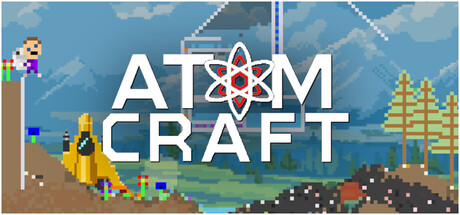
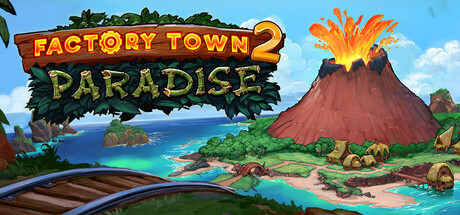
Atomcraft is the closest match if pixel chemistry and dangerous reactions are your priority. It leans into laboratory style experimentation and engineering. Factory Town 2: Paradise is the better option when you want automation to serve a relaxed town, with residents and logistics shaping each other. Ore Factory Squad offers mining and conveyor growth with cooperative chaos, making it the relevant alternative when playing with friends matters more than detailed particle simulation.
Verdict
Sandustry has a clear identity at the start of Early Access. Its simulated terrain can turn a production plan into an environmental puzzle, and the available demo evidence suggests that even manual handling can be satisfying. The responsible conclusion is still conditional. Start now for experimentation, solo automation, and the pleasure of discovering unstable systems. Wait for broader evidence if you need proven depth, predictable polish, or multiplayer before committing.
Transparency
Sources and methodology
8 verified external sources
This article was researched using the primary and industry sources linked below. Links open in a new tab.