Pipistrello and the Cursed Yoyo Review – A GBA-Era Masterclass That Deserves Way More Attention
A bat, a sentient yoyo, and a debt-fuelled adventure through four crime-riddled city districts: Pocket Trap's Pipistrello is one of 2025's most inventive indie gems.
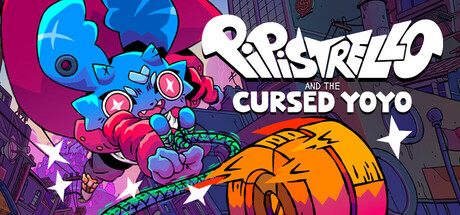
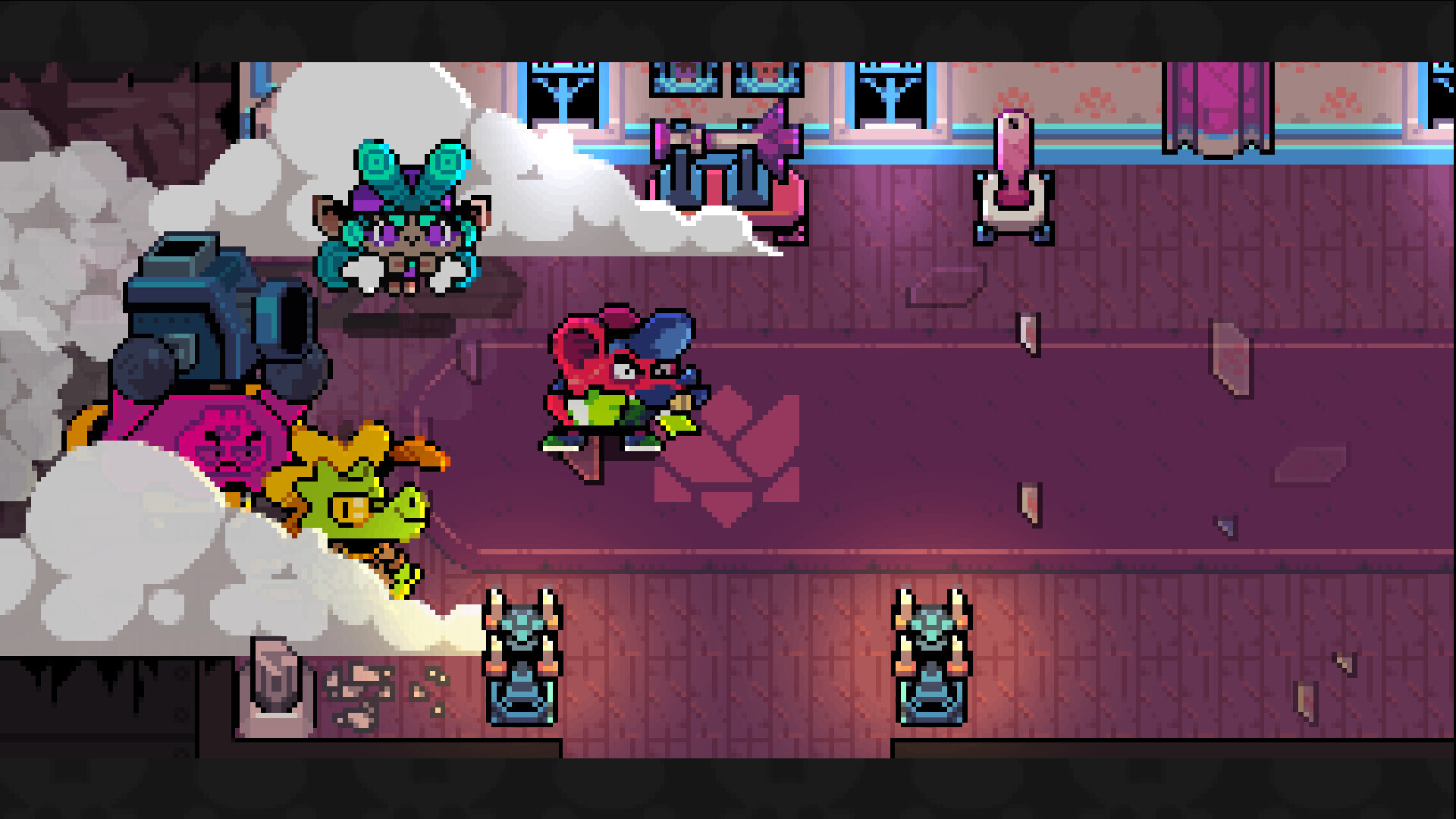
Pipistrello and the Cursed Yoyo opens with a premise that sounds absurd and immediately earns it: Pippit's aunt gets literally fused with a yoyo, four villains have stolen 'Mega Batteries', and the only way forward is to master a sentient spinning toy as both weapon and travel companion. Brazilian studio Pocket Trap could have coasted on that charm alone, but instead they built an entire action-adventure around genuine yoyo tricks — over ten of them, each with its own mechanical use — and wrapped it all in a pixel aesthetic that feels exactly like a lost GBA cartridge from 2003. Critics at OpenCritic rated it 'Mighty' with an 89-point average and a 98% recommendation rate, placing it in the top 1% of reviewed games. Steam users call it 'easily GOTY material'. Both claims, after spending time with it, are hard to argue with.

Spinning, Sliding, Solving: The Yoyo as the Center of Everything
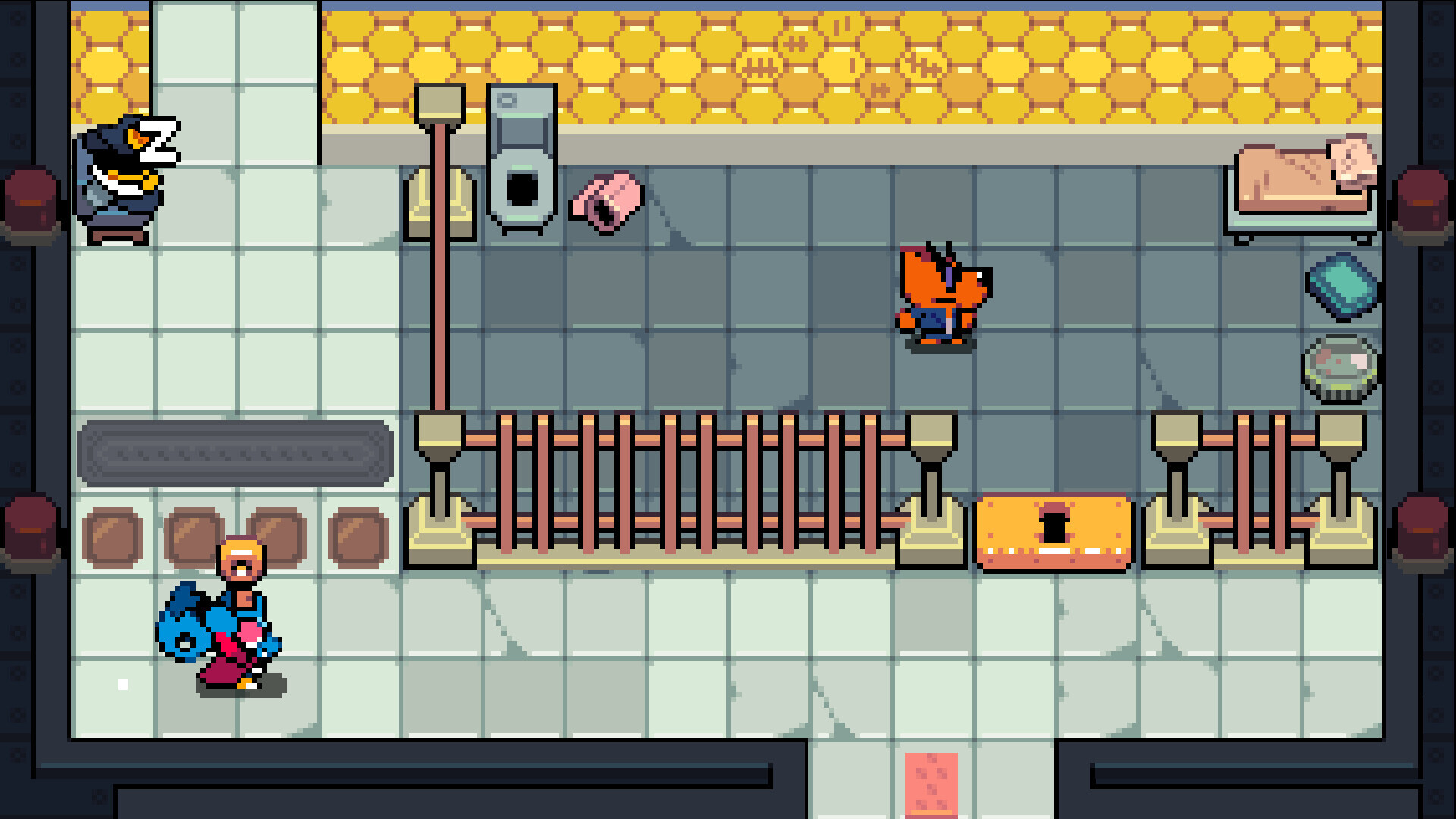
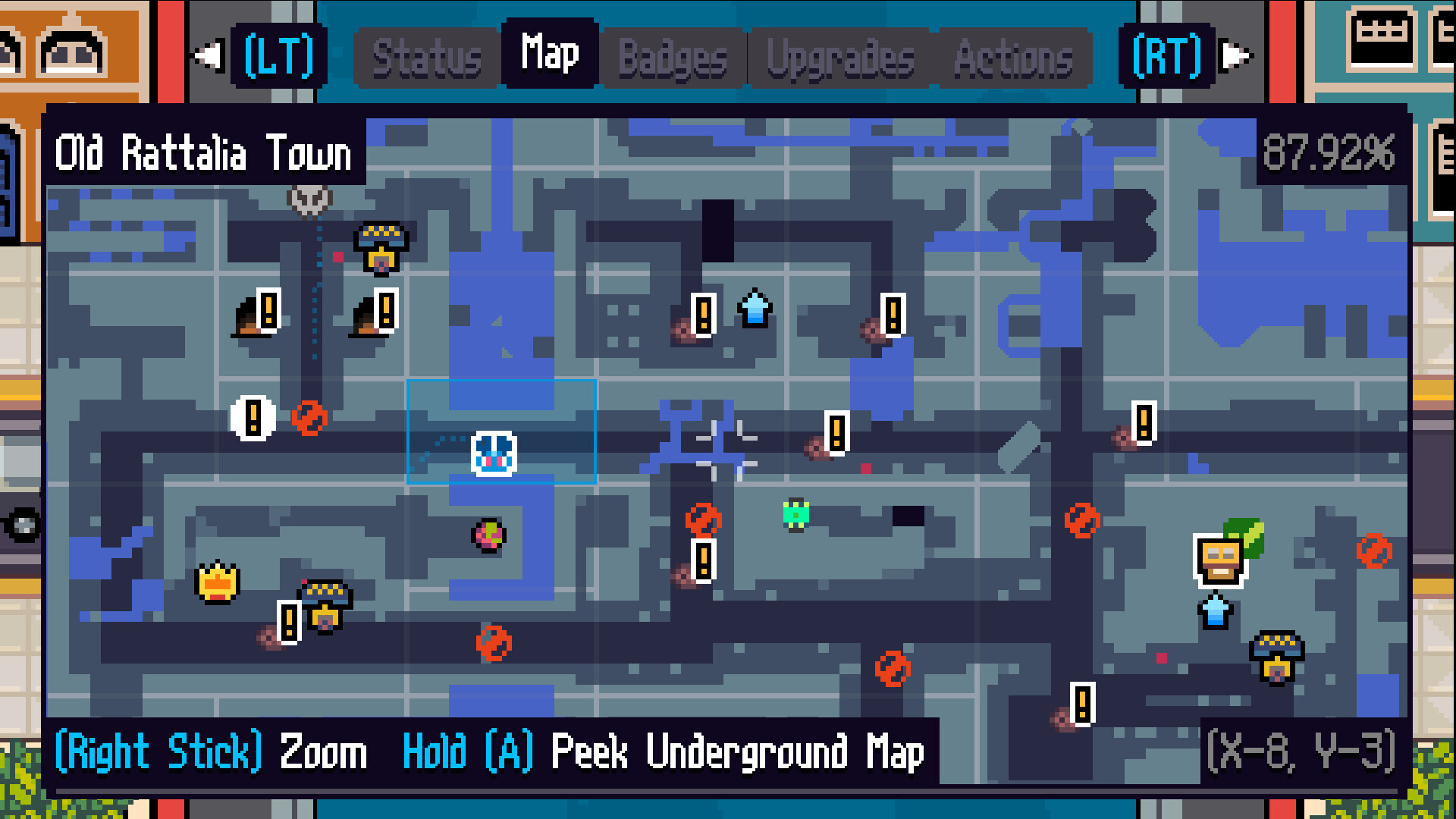
The yoyo is not a gimmick. That is the first thing to understand about Pipistrello. Tricks like 'Walk the Dog' — where the yoyo shoots forward along the ground and drags Pippit across water — are not cosmetic flourishes but core traversal tools. Different tricks open different paths through the game's four city districts (a shopping quarter, an industrial zone, a geek convention, and a sports precinct), each with its own crime boss and visual identity. Nearly every screen in this 1,000-plus-room world demands a specific solution, and many rooms offer several. The density of ideas per square pixel is genuinely impressive: this is a game that never lets a room feel like corridor filler.
Debt, Badges, and Deliberate Trade-Offs
What keeps the progression interesting is the contract system. Upgrades are not earned cleanly; they are financed through a loan shark, and taking on debt means accepting concrete drawbacks — fewer heart containers, reduced stats, or other penalties. It is a mechanic that forces real decisions rather than passive accumulation. On top of that, over 40 equippable badges and 20-plus passive upgrades give meaningful build variety. The coin-drop-on-death system (borrowed from Celeste's strawberry logic, sharpened a little more painfully) creates stakes without being insurmountable — especially since Pipistrello's granular accessibility options let players dial down or entirely disable coin loss, fall damage, or enemy attack power. That is a rare and welcome sign of confidence: the game is hard enough to be satisfying, and the developers trust players to find their own difficulty level.
GBA Nostalgia with Modern Polish
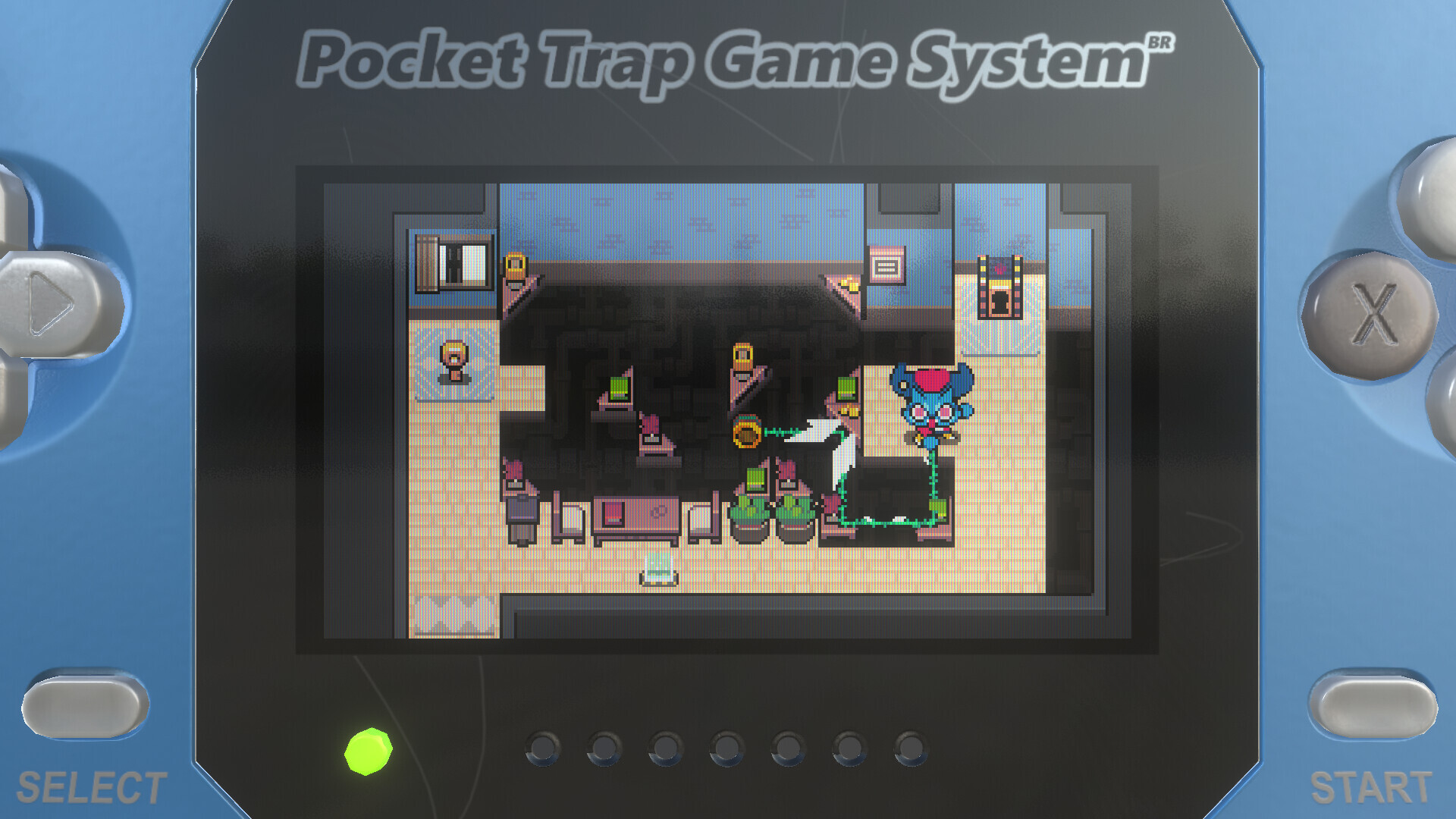
The optional retro frame mode, which renders the game inside a fake Game Boy Advance shell complete with faux plastic casing, is a wonderful touch for anyone who grew up with that hardware. It is purely cosmetic, but it commits completely to the bit. The visual style holds up without it too: clean, expressive sprites with a limited palette that does more storytelling work than many modern HD productions. The real ace up Pocket Trap's sleeve, however, is the soundtrack — Yoko Shimomura (Kingdom Hearts, Street Fighter II) contributed as a guest composer, lending the music a pedigree that matches the game's GBA ambitions perfectly. The result sounds like something you half-remember from childhood, which is probably the highest compliment this particular aesthetic can receive. Performance is smooth on Steam Deck (Verified), though isolated reports of frame drops on PC suggest the game is not completely bulletproof technically.

Pipistrello and the Cursed Yoyo is one of those indie games that makes you wish the word 'underrated' hadn't lost all its meaning from overuse — because it genuinely applies here. Pocket Trap built a tight, imaginative action-adventure around a mechanic that could have felt like a one-note joke and turned it into one of 2025's most satisfying gameplay systems. The hitbox issues and thin combat variety are real complaints worth knowing about, but they sit alongside a puzzle design that rivals the best top-down Zelda entries, a soundtrack with actual pedigree, and accessibility options that put many bigger studios to shame. If you have any affection for the GBA era or for action-adventures with real mechanical depth, this is a very easy recommendation at full price.


Pros
- Inventive yoyo mechanics with 10+ real tricks that serve as both combat tools and traversal options
- Exceptional puzzle and level design with over 1,000 screens — nearly every room has its own solution
- Yoko Shimomura guest soundtrack plus an optional GBA frame mode deliver spot-on retro atmosphere
- Granular accessibility options and Steam Deck Verified — welcoming without removing challenge for those who want it
Cons
- Hitbox mismatch — the yoyo's hit zone is small while Pippit's hurt box is large, leading to moments of genuine frustration in combat
- Combat variety is thin: limited enemy types and similar attack patterns make fighting feel repetitive, especially for those who prefer puzzles
- Despite the Metroidvania look, progression relies on fewer than 3 classic backtracking abilities — genre expectations may not be met for some players
Player Opinion
Steam players are not shy about their enthusiasm: phrases like 'easily GOTY material' and 'masterclass puzzle platformer' appear repeatedly in reviews, with many comparing the game favourably to A Link to the Past and Celeste in the same breath. Several reviewers describe it as 'basically Celeste and A Link to the Past combined, no fillers, pure gameplay fun' — high praise that the game's puzzle density and trick-chaining largely backs up. A recurring theme is genuine puzzlement at how little mainstream attention Pipistrello receives: 'severely underrated' and 'why isn't everyone talking about this' are common refrains. Brazilian players take particular pride in Pocket Trap's achievement, with more than one review noting that 'the best 2D Zelda-like was developed by a Brazilian studio'. On the critical side, the hitbox frustration and coin-loss mechanic are the two most common complaints — both acknowledged even by players who overall love the game, and both addressable via the accessibility options. The Steam Deck support is called out positively in multiple reviews as a sign that the developers thought carefully about their audience.