Keep Driving Review – A Swedish Road Trip You'll Want to Replay
Keep Driving turns every pothole, tractor, and hitchhiker into a turn-based decision: a pixel-art road trip through early-2000s Sweden with a killer indie soundtrack and a tight resource loop.
A tractor is blocking the road. You have a half-empty tank, a hitchhiker who has not stopped talking about her ex since Gothenburg, and exactly three items rattling around in your glove compartment. Do you honk, wait it out, or burn one of those precious resources to overtake? That is Keep Driving in a nutshell: a road trip RPG from two-person Goteborg studio YCJY Games (the same people behind POST VOID and Sea Salt) that turns the mundane friction of a summer drive into a quietly tactical resource game.
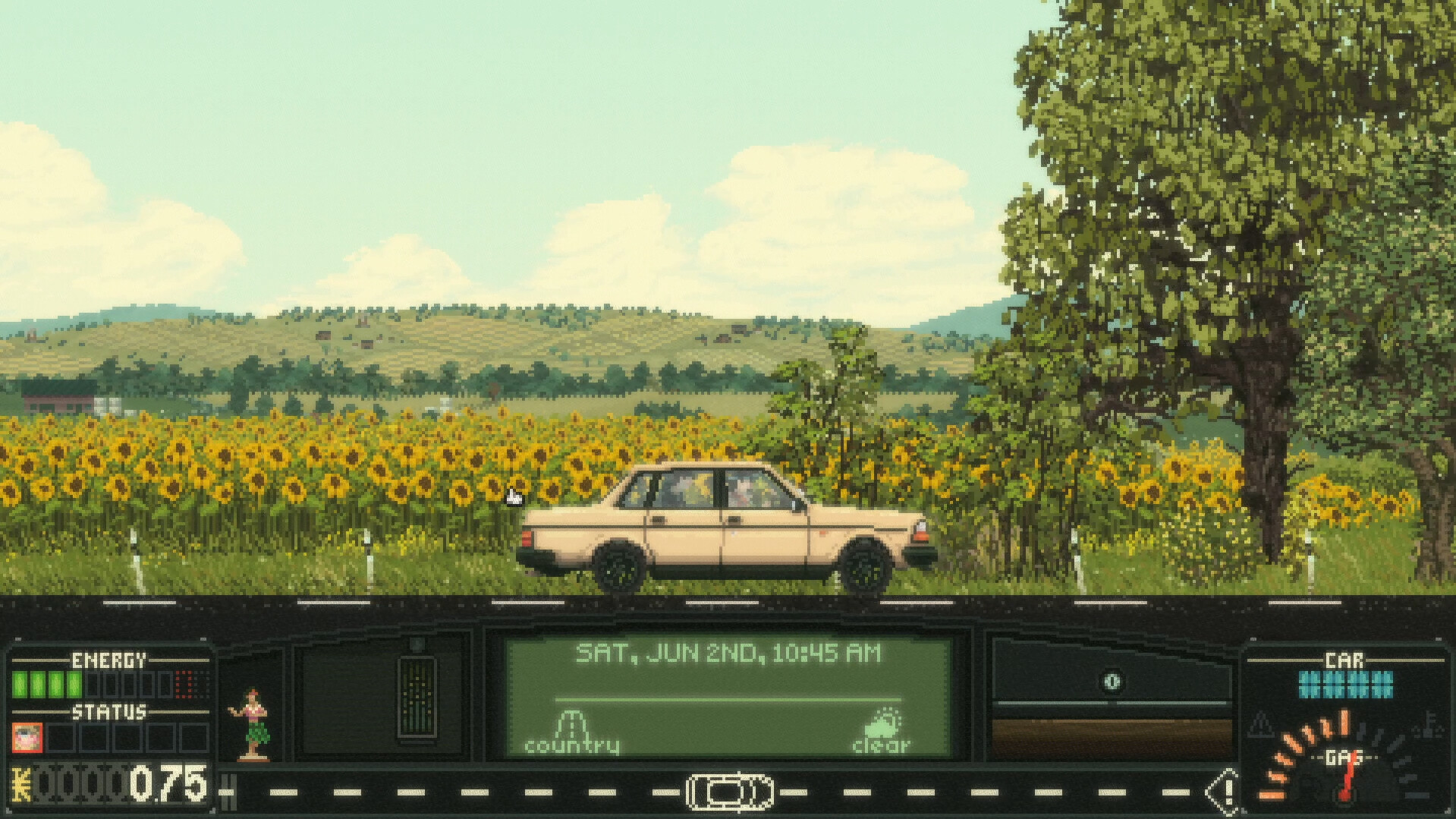
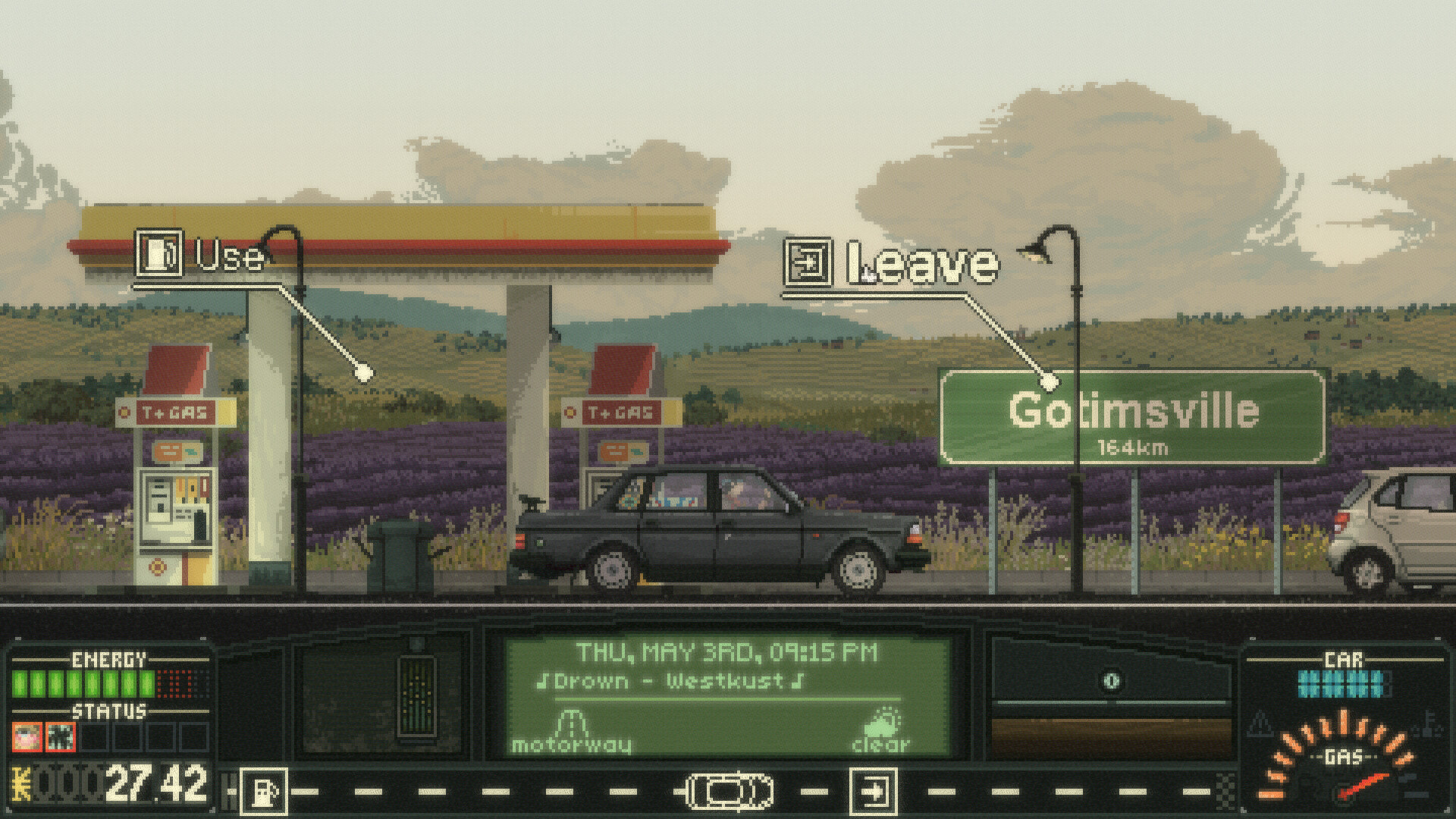
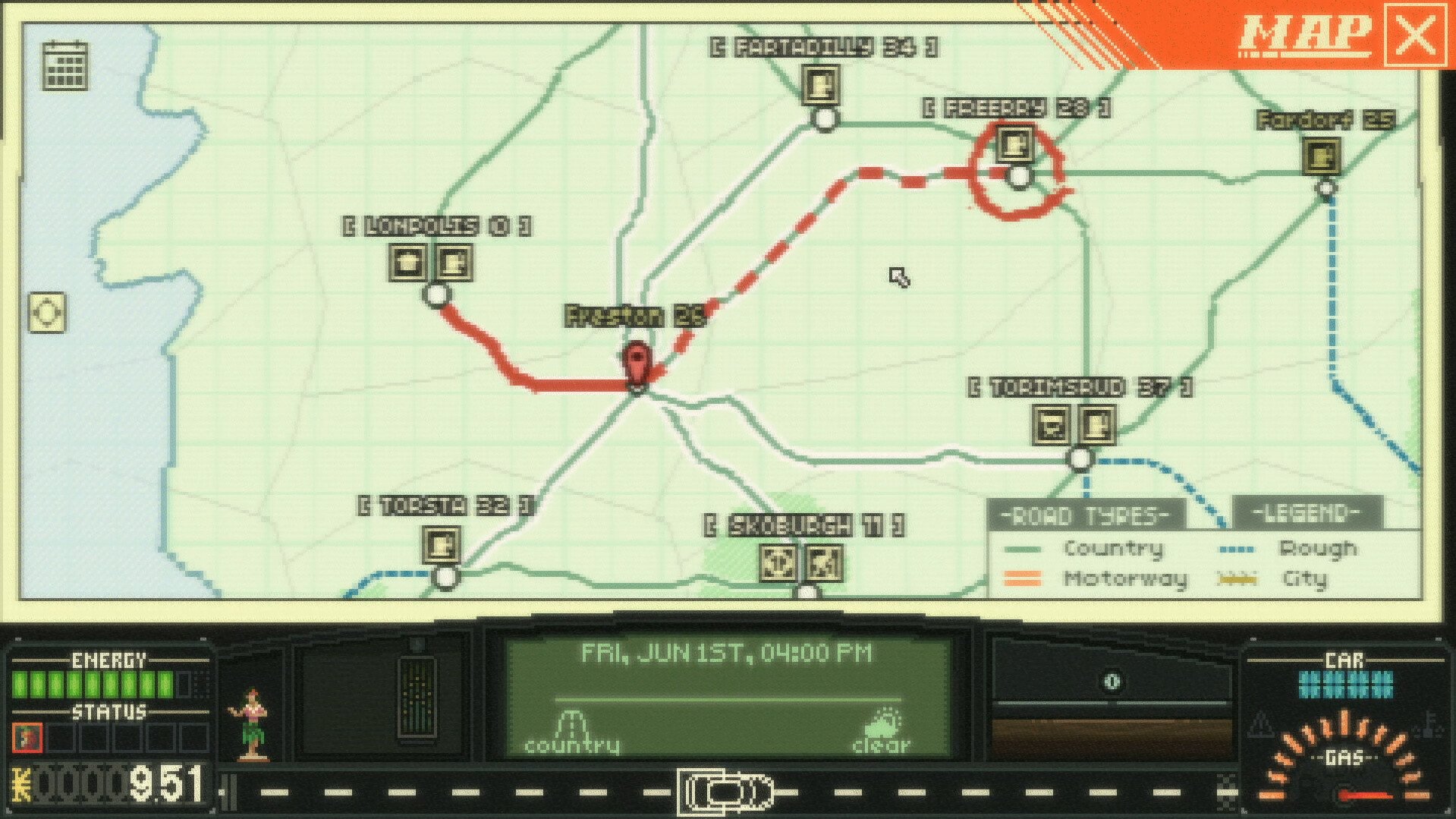
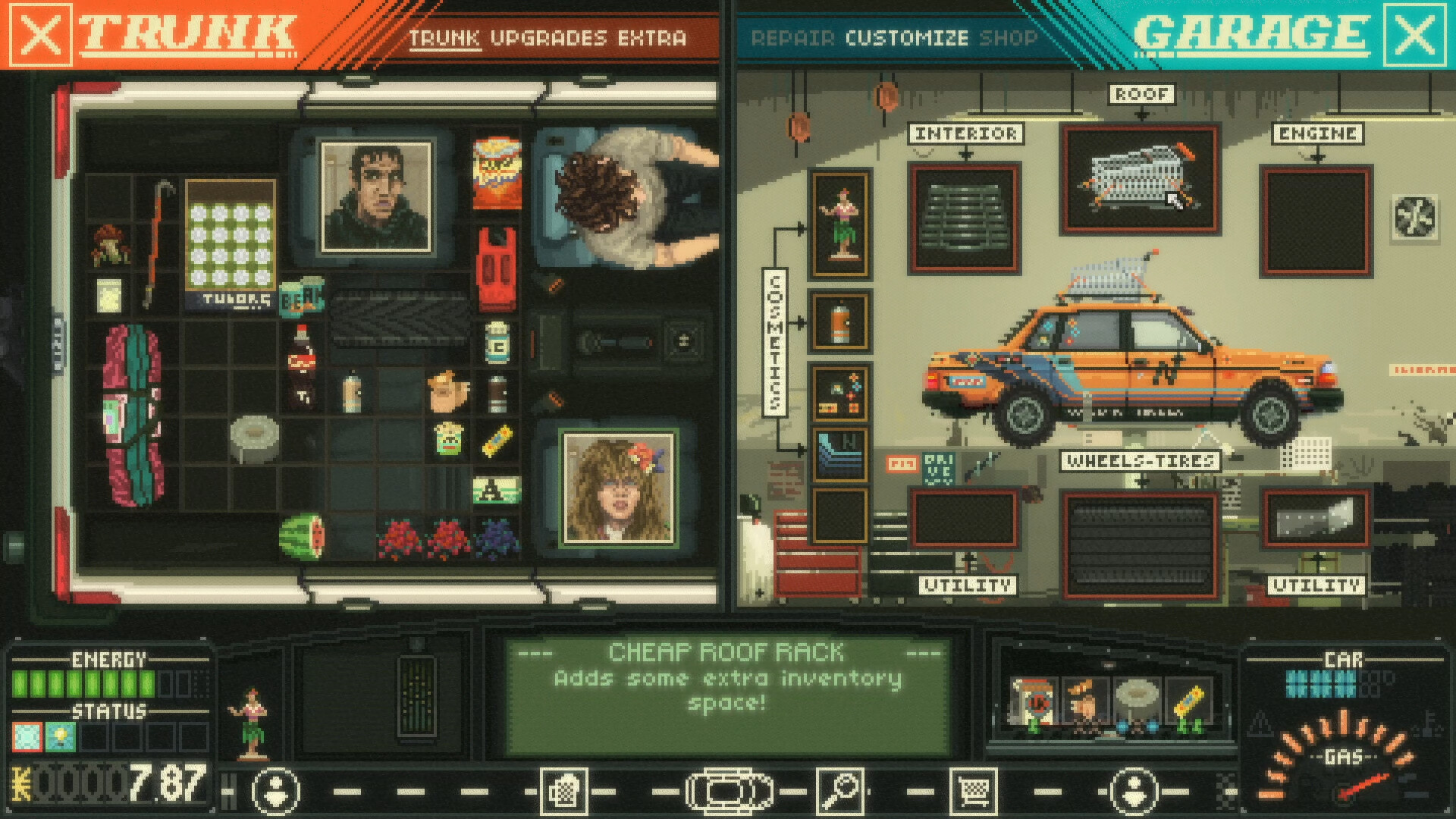
Set in the pixel-art backroads of early-2000s Sweden, the game sends you toward a music festival across a procedurally generated map, picking up strangers, managing your car's slow deterioration, and matching icon bars against roadside events that function like a stripped-down card battler. There are no cards, no deck, no jargon. Just a glove compartment, a tank gauge, and a licensed soundtrack of real Swedish indie bands: Westkust, Makthaverskan, The Honeydrips, and others that sound less like a game OST and more like someone's actual summer mixtape. PC Gamer called it a management RPG that perfectly captures the feel of a long and memorable road trip, and that is not far off.

Glove Compartment Combat: How Road Events Actually Work
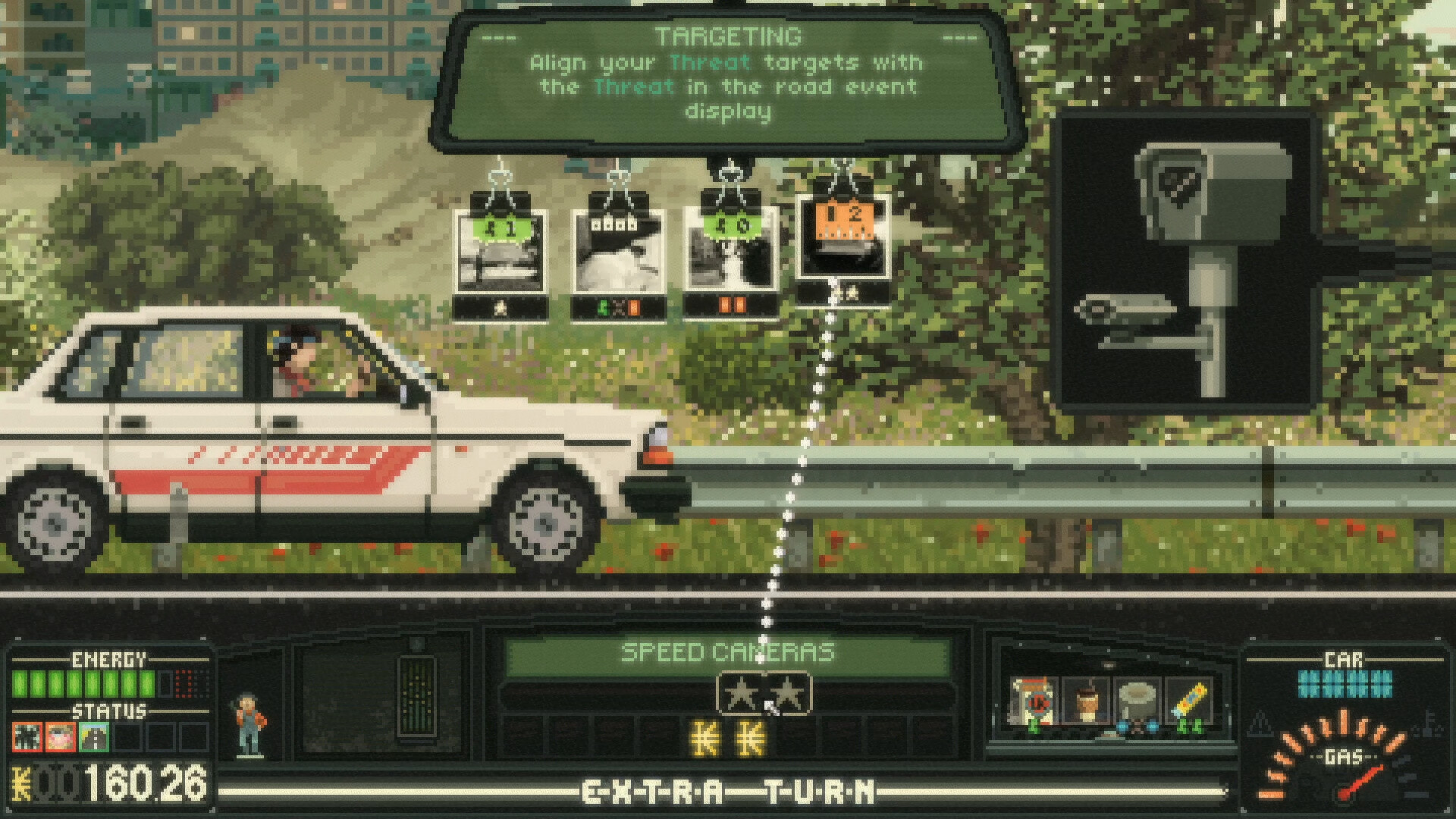
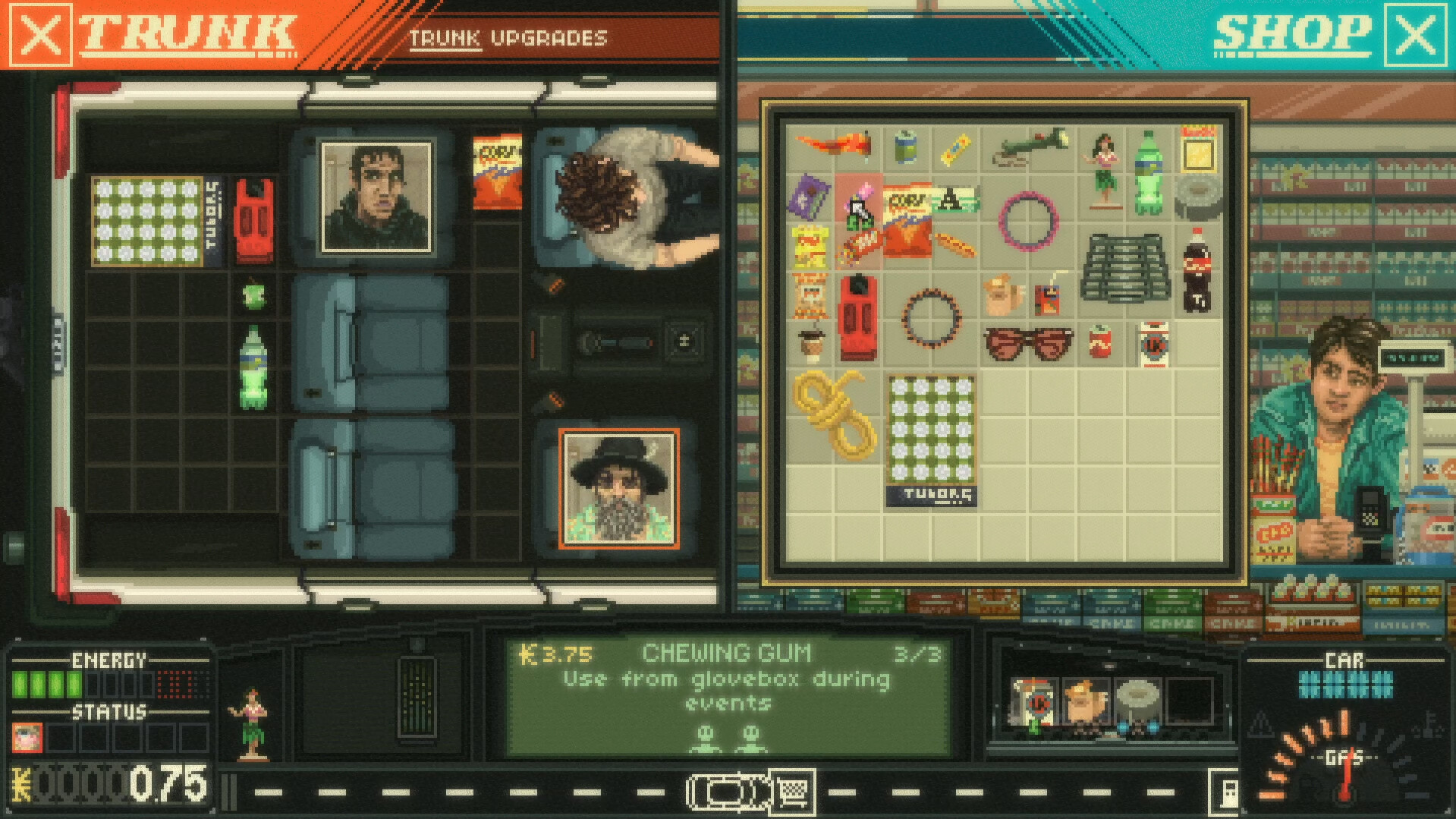
The core loop is deceptively simple. Each leg of the journey throws up random events: a stray suitcase in the lane, a slow farm vehicle, a sudden downpour, a roadside argument. These resolve through an icon-matching mechanic that sits somewhere between a slot machine and a light tactics puzzle. You pick items from your glove compartment (a map, a snack, a tool), and those choices shift the odds on a narrow icon bar you then try to align with a target. It reads awkward on paper; in practice it clicks fast and carries genuine stakes because every bad resolution chips away at fuel, money, car durability, or your driver's energy. Running out of any one of these ends the run. The tension is not dramatic, but it is persistent and surprisingly satisfying, closer to FTL's resource anxiety than to anything in the cozy game genre it sometimes gets filed under.
Swedish Summer, Procedural Roads, and Very Annoying Hitchhikers
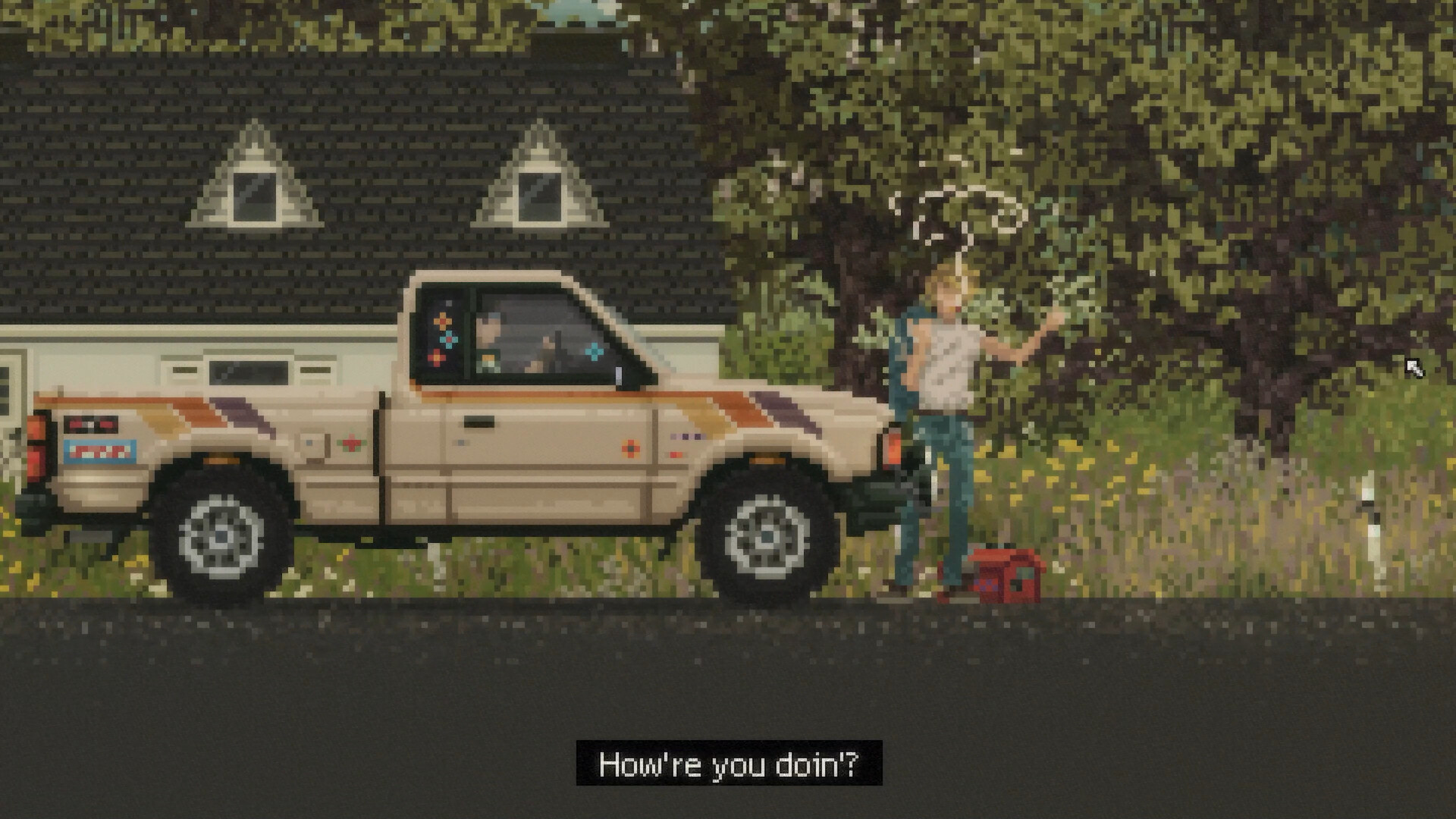
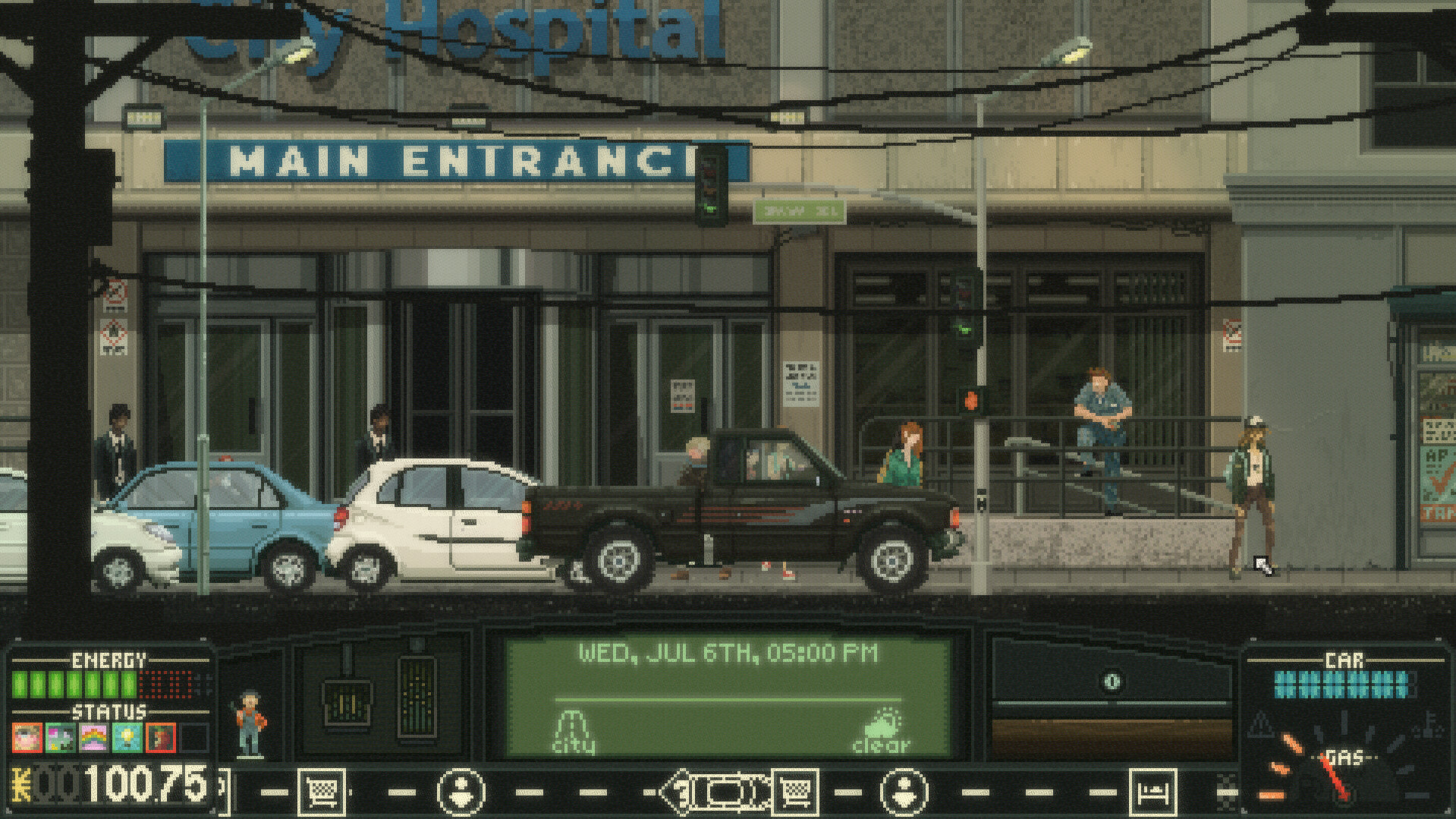
What makes Keep Driving more than a mechanical exercise is its atmosphere. The pixel art is soft and grainy, intentionally evoking worn VHS footage of a decade most players either remember fondly or romanticize from a distance. Each run generates a different route through the Swedish countryside, with a rotating cast of hitchhikers who bring their own short stories, dialogue quirks, and occasional mechanical bonuses or penalties. Polygon singled out the perfectly annoying nature of these passengers as a strength, and rightly so: they feel written, not procedurally generic. Multiple endings reward replaying with different routes and decisions, though the unlock loop does require patience. The licensed indie rock and shoegaze soundtrack (Westkust, Makthaverskan, Fucking Werewolf Asso, My Darling YOU!) is not background noise. It is arguably the game's single strongest asset.
Pixel Art, Readability, and the Steam Deck Question
Technically, Keep Driving is clean but not flawless. The pixel art style is consistent and characterful, with a lo-fi warmth that suits the subject perfectly. The problem surfaces at scale: on large monitors (think 49-inch ultrawide), the UI becomes genuinely hard to read, with text and icons pixelated to the point of strain. It is a real issue that several players flag in reviews, and it has not been fully addressed. Steam Deck support is listed but users report mixed results with controls and text scaling, so it is worth checking current community reports before buying for handheld play. For a standard 1080p or 1440p desktop setup, these issues largely disappear.

Keep Driving is a tightly designed, deeply atmospheric road trip that punches well above its budget. YCJY Games has built something that feels genuinely personal: a pixelated Swedish summer with a real mixtape on the stereo, a glove compartment full of improvised decisions, and enough procedural variety to keep multiple runs interesting. It is not a long game, and it is not a demanding one. After a few runs the event repetition shows, and the UI needs work for large-screen setups. But as a compact, mood-first indie RPG, it earns its Very Positive rating honestly. Recommended for fans of Oregon Trail's resource tension, FTL's event-based decision loops, or anyone who has ever driven somewhere far with strangers and a good playlist.


Pros
- Icon-bar event system is immediately accessible yet carries genuine resource stakes
- Licensed Swedish indie and shoegaze soundtrack that players actively seek out offline
- Procedural map and rotating hitchhiker cast make each run feel distinct
- Strong lo-fi atmosphere: early-2000s Swedish nostalgia hits a very specific emotional note
Cons
- Repetition sets in after 2-3 runs; events recycle noticeably and pacing drags between encounters
- UI is hard to read on large monitors; Steam Deck support is unreliable in practice
- Too laid-back for players wanting real challenge: consequences rarely bite hard enough
Player Opinion
The dominant word in Steam reviews is vibes: players describe Keep Driving as a summer mood in game form, something that hits a specific nostalgic frequency without trying too hard. The soundtrack gets consistent praise from people who explicitly say they downloaded the tracks to play in their actual cars. The icon-bar mechanic is frequently called addictive and deeper than it looks, which seems to be the consensus sweet spot: low barrier, real thinking. On the critical side, the most common complaint is that the first run is magical and the second one already feels familiar. Several reviewers mention waiting around between events and a sense that the game burns through its best content quickly. The UI pixelation issue on large monitors comes up repeatedly in more negative reviews, and a handful of Steam Deck owners flag that handheld play is not as smooth as the compatibility tag suggests. A running theme in positive reviews: people call it a great secondary screen game, something to play while half-watching something else. That is either a compliment to its relaxed pacing or a polite way of saying it does not demand your full attention.