01 / Exact Steam split
Steam recommendations
Overwhelmingly PositiveSteam recommendations: 2,723 positive, 143 negative (2,866 total)
Playtime when reviewed
Latest 100 fetched reviews- < 1h
- 8
- 1โ5h
- 88
- 5h+
- 4

by TearyHand Studio
A devastating 1-hour dementia story that earns every tear.
Community evidence
This automated Steam evidence is separate from the BestOfGames review and editorial score.
All languages ยท all purchase types ยท Steam's default off-topic filtering
01 / Exact Steam split
Steam recommendations: 2,723 positive, 143 negative (2,866 total)
02โ03 / Automated text analysis
Tone, topics, and time trend stay hidden until sample size, coverage, freshness, and classifier version are compatible.
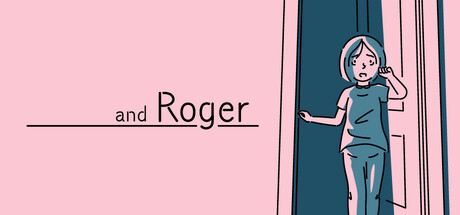
and Roger is a ~1-hour point-and-click game about dementia that puts you inside a confused mind โ winner of the GDC 2026 Audience Award and Indie Game Award Grand Prix, and one of the most emotionally concentrated games in years.
A young girl wakes up, walks into the living room, and finds a stranger sleeping on the couch where her father should be. The man stirs, sighs, and mutters something about medicine. That's the opening of and Roger, and those ten seconds already contain its entire thesis: something is wrong, and you are going to feel it, not just watch it.
Developed by solo creator yona at TearyHand Studio and published โ of all people โ by Kodansha, the manga giant making its first tentative steps into games, and Roger arrived in July 2025 at the modest price of $3.49. It then proceeded to win the Grand Prix at Indie Game Award 2026 in Taipei and, shortly after, the Audience Award at the 2026 Game Developers Choice Awards. That is a remarkable sweep for a game most people finish before their lunch break is over.
Kotaku called it one of 2025's most special games. Game Informer praised its mechanical cleverness. 96.1% of Steam reviewers rate it positively, which places it comfortably in Overwhelmingly Positive territory. The reason for all this is not spectacle or scale. It is that and Roger figured out something most narrative games never do: if you want someone to understand confusion, make them perform the confusion, not observe it.
This is not a game for everyone. It is short, it is Christian in its final beats, and it will absolutely ruin your afternoon. But for the audience it is aimed at, it is close to flawless.
and Roger is a point-and-click game structured in three chapters, and its genius lies in how mundane its tasks are. You are looking for a toothbrush. You are trying to get dressed. You are taking your medicine. These are not puzzles in the traditional sense โ there are no inventory chains, no cryptic locks. The friction comes from the fact that the mind you are inhabiting increasingly cannot hold on to what it is doing. Objects shift. Instructions contradict themselves. The act of reaching for something familiar becomes disorienting in a way that is hard to explain but immediately, viscerally understood once you experience it. You are not reading about cognitive decline. You are, briefly and gently, performing it.
This mechanic is reused across chapters, and seasoned players will notice the repetition. The novelty does diminish slightly by the third act. But the emotional escalation compensates: each chapter recontextualizes the last, and the final reveal โ which flips the perspective entirely and reframes everything you thought you understood about the girl, the stranger, and the relationship between them โ lands with quiet devastation rather than cheap shock.
The story's central construction is its biggest asset and, for some players, its most foreseeable limitation. Those familiar with unreliable-narrator structures in interactive fiction will likely piece the twist together before the game intends. The stranger on the couch is not a stranger at all; the girl with dementia is not who you assumed. The reveal is handled with restraint and visual elegance, and even if you see it coming, the execution still stings. Where and Roger separates itself from comparable games like Florence or Unpacking is in how completely mechanics and theme are fused: the gameplay is the metaphor, not a wrapper around it.
Visually, the game uses a hand-drawn minimalist aesthetic that starts charming and gradually edges toward unsettling as the story progresses. The visual language shifts in subtle ways that reward attention without ever becoming obvious. The soundtrack exercises similar restraint โ it knows when silence is the right choice, which in a game about memory loss is itself a statement. For a project from a one-person studio, the production coherence is exceptional. Nothing is lavish, but everything is deliberate.
and Roger is proof that a game can be $3.49, roughly one hour long, and still punch harder than most blockbusters released that year. It won two major 2026 awards not through spectacle, but through the rare achievement of making a mechanic feel inseparable from its meaning. The religious framing will genuinely put some players off, the twist is readable for experienced genre players, and the brevity will frustrate those who want more time inside its world. But for anyone who has watched a family member disappear into dementia, or who simply wants to understand what that experience feels like from the inside, this is one of the most considered and compassionate interactive works of recent years. Buy it. Clear your afternoon. Have tissues ready.
The loudest instruction in the Steam reviews is consistent: go in completely blind, don't read anything, just play it. Players who followed that advice consistently describe being emotionally wrecked by the end. Those with personal dementia experience in their families report that the game articulated feelings they had never been able to put into words โ which is about as high a compliment as a game about this subject can receive. Several reviews use the word 'shattering'. At least one says: 'I don't think I can ever play this again, it shattered my heart' โ and then gives it a thumbs up anyway. The art style, soundtrack, and the way mechanics embody the theme rather than merely illustrate it draw consistent praise. The main fault line is the Christian religious framing near the end: atheist and non-religious players who otherwise adored the game frequently note it as jarring, while others found it moving or appropriate. A smaller contingent argues the forgiveness arc risks romanticizing or excusing elder abuse. Almost everyone agrees the ~1 hour length is simultaneously the game's greatest discipline and its most frustrating constraint.
*and Roger* is proof that a game can be $3.49, roughly one hour long, and still punch harder than most blockbusters released that year. It won two major 2026 awards not through spectacle, but through the rare achievement of making a mechanic feel inseparable from its meaning. The religious framing will genuinely put some players off, the twist is readable for experienced genre players, and the brevity will frustrate those who want more time inside its world. But for anyone who has watched a family member disappear into dementia, or who simply wants to understand what that experience feels like from the inside, this is one of the most considered and compassionate interactive works of recent years. Buy it. Clear your afternoon. Have tissues ready. Our score: 9.0/10.
and Roger earns a score of 9.0 out of 10 from BestOfGames.
and Roger is available on Mac, Windows.
Keep playing
Games like and Roger
Similar indie titles you might love โ curated by shared tags and score.
From the magazine