01 / Exact Steam split
Steam recommendations
MixedSteam recommendations: 281 positive, 128 negative (409 total)
Playtime when reviewed
Latest 100 fetched reviews- < 1h
- 14
- 1–5h
- 38
- 5h+
- 48

by Raphus & Co. • January 31, 2026
Plinko meets roguelike deckbuilding.
Community evidence
This automated Steam evidence is separate from the BestOfGames review and editorial score.
All languages · all purchase types · Steam's default off-topic filtering
01 / Exact Steam split
Steam recommendations: 281 positive, 128 negative (409 total)
02–03 / Automated text analysis
Tone, topics, and time trend stay hidden until sample size, coverage, freshness, and classifier version are compatible.
A playful mash-up of Plinko physics and roguelike deck-building. Addictive runs, surprising synergies, but a few rough edges and bugs at launch.
I didn’t expect to be hooked by a digital Plinko board, but Plinbo is a clever little hybrid that turns falling balls into a playground for strategy and chance. It blends tarot-like cards, turn-based challenge choices and physics-driven coin carnage into short, replayable runs that constantly ask: should I play it safe or gamble everything? It’s the kind of indie experiment that feels familiar if you’ve played Balatro or Luck Be a Landlord, yet manages its own personality thanks to satisfying ball physics and a CRT-flavored visual vibe.
Plinbo’s turns are deceptively simple: you choose cards, decide whether to accept risk-filled challenges, and then watch a flurry of balls tumble through pegs, multipliers and pin effects. The core loop is a blend of deckbuilding and resource management — buy cards, optimize synergies, and try to reach a money target while surviving RNG swings. Most of my time is spent balancing early-game stability (cards that keep you afloat) against late-game bombs that can multiply values absurdly fast. There’s a satisfying tactile joy when a ball ricochets into a jackpot slot and coins explode across the screen. Runs are short but often lead to “one more turn” stretches where the board keeps whispering opportunities and punishments.
What sets Plinbo apart is the card palette: tarot-like persistent modifiers, luck cards that trigger immediate chaos, and challenge cards that let you gamble for bigger payouts. Synergies matter — some cards shore up early survival, others unlock late-game engines; finding the right combos is part puzzle, part thrill. The game forces decisions: buy that expensive pin upgrade that might delete a previous ability, or hoard tickets and hope RNG cooperates. I loved discovering niche combos that felt unfairly powerful, but also found a handful of cards that are confusing or feel poorly explained. The high-risk challenges add tension; they’re tempting when you’re behind and occasionally infuriating when you’ve been robbed by unlucky bounces.
Visually, Plinbo leans modern-retro: clean shapes, a CRT bloom option and a minimal UI that mostly works but can feel inconsistent. The physics are excellent — balls behave in a pleasingly realistic, chaotic way — and the sound design gives you satisfying plinks and coin showers. That said, the audio loop can grate after long sessions and some UI text (card descriptions, shop warnings) is hard to parse. Performance is generally fine on modest hardware, but a few players report lag when many pins and balls spawn; I noticed frame drops on prolonged runs as well. Accessibility options are modest but the straightforward mechanics make it approachable for newcomers to roguelikes.
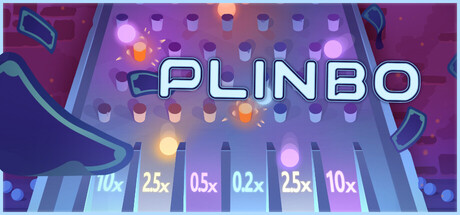
Plinbo is a creative, cozy little roguelike that nails the feel of Plinko while giving you meaningful deckbuilding choices. I found it irresistible in short bursts, and the joy of discovering synergies kept me coming back — even when bugs or lag soured a run. If you enjoy punishing RNG mixed with clever card combos (and can tolerate a few rough edges), Plinbo is worth the price of admission. For now, treat it as a delightful but still-maturing indie: play it, enjoy it, and keep an eye out for updates.
Players love the addictive loop and the way cards create emergent strategies — many reviewers compare Plinbo favorably to Balatro, Luck Be a Landlord or Ballionaire, praising the joy of watching numbers explode. Common praise centers on replayability, satisfying physics, and the thrill of finding a broken synergy. On the flip side, multiple users report performance problems on long runs, confusing card text, and a handful of bugs including infinite spawn loops or broken late-game interactions. Some community members also complained loudly about the demo-era behaviour that opened a browser window on exit; while that specific issue seems tied to older builds, distrust lingered. If you like casual strategy with RNG-driven tension, you’ll probably enjoy Plinbo — but be prepared for rough edges and occasional technical hiccups.
Plinbo is a creative, cozy little roguelike that nails the feel of Plinko while giving you meaningful deckbuilding choices. I found it irresistible in short bursts, and the joy of discovering synergies kept me coming back — even when bugs or lag soured a run. If you enjoy punishing RNG mixed with clever card combos (and can tolerate a few rough edges), Plinbo is worth the price of admission. For now, treat it as a delightful but still-maturing indie: play it, enjoy it, and keep an eye out for updates. Our score: 7.3/10.
Plinbo: Roguelike Plinko earns a score of 7.3 out of 10 from BestOfGames.
Plinbo: Roguelike Plinko is available on Mac, Linux, Windows.
Keep playing
Games like Plinbo: Roguelike Plinko
Similar indie titles you might love — curated by shared tags and score.