01 / Exact Steam split
Steam recommendations
Mostly PositiveSteam recommendations: 308 positive, 109 negative (417 total)
Playtime when reviewed
Latest 100 fetched reviews- < 1h
- 15
- 1–5h
- 30
- 5h+
- 55

by Ashborne Games • September 17, 2026
A medieval economic and political simulation about building workshops, raising a multi-generation dynasty and gaining civic power through trade, relationships and intrigue.
Community evidence
This automated Steam evidence is separate from the BestOfGames review and editorial score.
All languages · all purchase types · Steam's default off-topic filtering
01 / Exact Steam split
Steam recommendations: 308 positive, 109 negative (417 total)
02–03 / Automated text analysis
Tone, topics, and time trend stay hidden until sample size, coverage, freshness, and classifier version are compatible.
A source-based assessment of a deep medieval dynasty simulation whose connected systems currently demand patience with menus, balance and Early Access roughness.
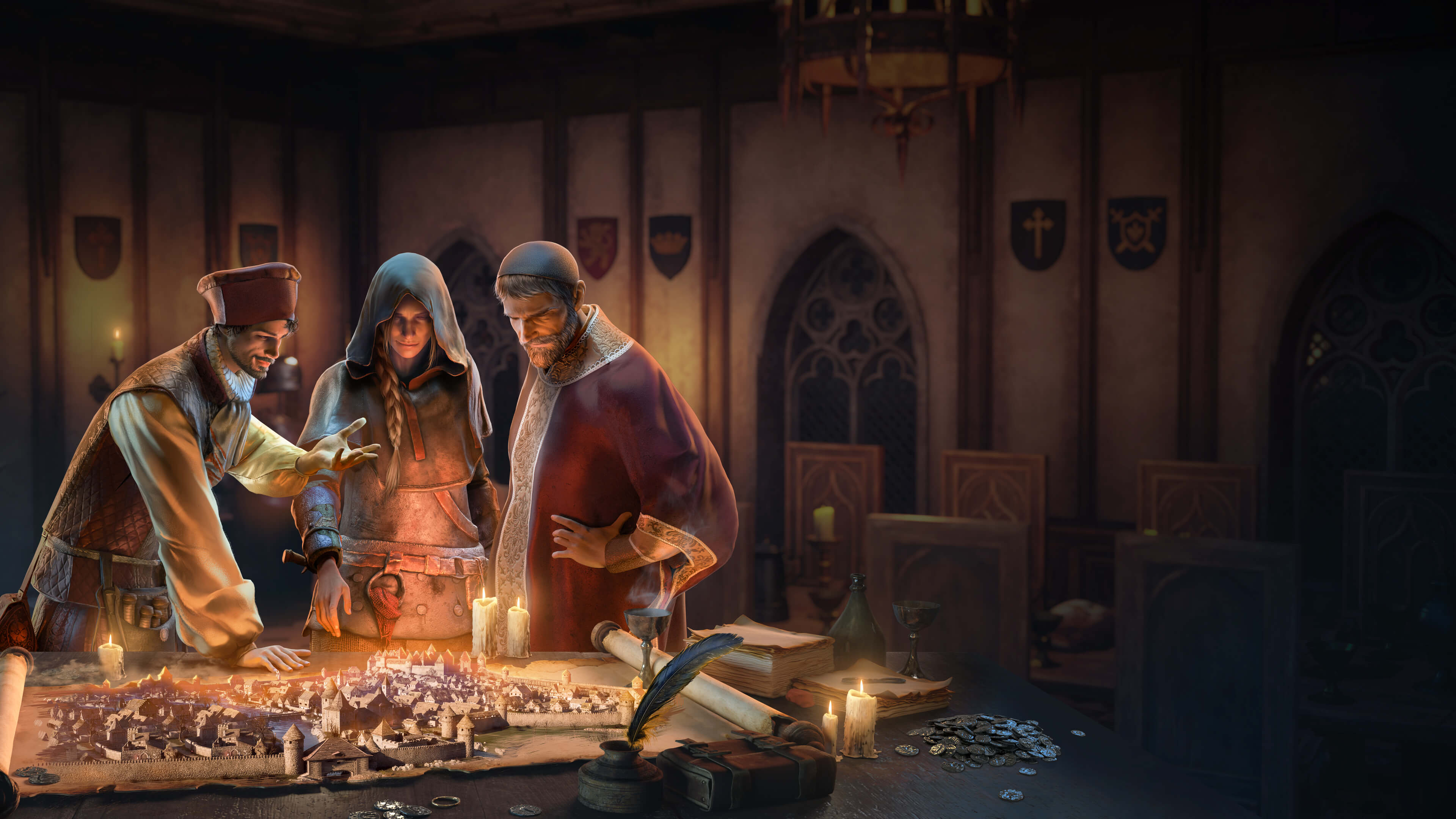
The Guild 1 Remake: Europa 1410 is most convincing when a workshop is not merely a source of money. Trade supports a family, the family secures succession, wealth opens political offices, and influence can be used to protect a business or undermine a rival. Ashborne Games has built an unusually connected medieval sandbox around that chain. The current Early Access version already gives patient management fans enough interacting systems to create stories rather than simply optimize a production line.
That promise comes with serious friction. Important actions live inside dense menus, the tutorial does not explain every dependency, and balance or performance problems can turn a setback into busywork. This source-based assessment was prepared with AI from the official product information and two independent editorial reports. BestOfGames has not playtested the game.
The economic layer is the foundation. Workshops need materials, workers and sensible prices, while supply chains can depend on carts, guards and storage. Game8 describes a loop in which procurement, wages, demand and margins all matter. Money then connects to the wider social simulation. A dynasty needs courtship, heirs and succession, and civic power can be pursued through popularity, bribery, blackmail or criminal work. The official feature outline supports that breadth, while both independent reports describe play that moves between business, family and politics rather than treating them as isolated modes.
This connection is the main strength. An honest trader can pursue office, a respected citizen can keep illicit work hidden, and a family decision can matter because the current character will eventually die. The Wand Report also documents surprising event chains and small environmental moments that give the numerical systems personality. Game8 separately praises the medieval atmosphere and the freedom to mix legitimate and criminal routes. The result appears best suited to players who enjoy learning a complicated simulation and accepting losses as part of a family story.
The same complexity exposes the current weaknesses. Game8 reports nested submenus, small unclear icons and repetitive click paths for ordinary jobs such as checking output or setting routes. Its account of the sparse onboarding suggests that automation, law and courtroom systems can remain obscure until failure makes them expensive. The Wand Report finds some tutorial objectives equally hard to read and describes maintenance costs that can overwhelm an early workshop. These are not minor presentation complaints because they interfere with the information needed to make strategic decisions.
Balance is another reason for caution. The Wand Report describes robberies that repeatedly affect loaded carts even when an escort reduces the loss, making an event feel predictable rather than surprising. It also reports jitter around turn endings. The official Early Access notice says many features remain at an early stage and lists additional professions, maps, action presentation, languages and multiplayer for future development. The current version therefore has a substantial systemic core, but it is not a finished destination. Players who want clear tutorials, smooth turn transitions or reliably fair event pressure should wait for further updates.
The documented build earns a 7.8 source-synthesis score. Its best ideas reinforce one another: business decisions shape status, status changes political options, and family succession gives both gains and mistakes a longer horizon. The medieval world also seems capable of producing memorable personal stories from systems rather than scripted spectacle.
The recommendation remains conditional. Dense menus and incomplete explanations make the learning cost higher than the underlying rules require. Punitive events, maintenance pressure and reported turn jitter add problems that Early Access still needs to solve. Buy now if a demanding, menu-heavy dynasty simulation sounds appealing even when balance is unsettled. Wait if approachability, polished performance, multiplayer or the complete profession and map set matter more than participating in development.
The documented build earns a 7.8 source-synthesis score. Its best ideas reinforce one another: business decisions shape status, status changes political options, and family succession gives both gains and mistakes a longer horizon. The medieval world also seems capable of producing memorable personal stories from systems rather than scripted spectacle. The recommendation remains conditional. Dense menus and incomplete explanations make the learning cost higher than the underlying rules require. Punitive events, maintenance pressure and reported turn jitter add problems that Early Access still needs to solve. Buy now if a demanding, menu-heavy dynasty simulation sounds appealing even when balance is unsettled. Wait if approachability, polished performance, multiplayer or the complete profession and map set matter more than participating in development. Our score: 7.8/10.
The Guild 1 Remake: Europa 1410 earns a score of 7.8 out of 10 from BestOfGames.
From the magazine